
Basal stem rot of oil palm
Oil palm
The primary causal agent of this devastating disease is the fungus Ganoderma boninense, which is a wood-decaying basidiomycete that specifically targets oil palms.
What the section contains
Basal stem rot of oil palm
This pathogen acts by colonizing the root system and moving into the base of the stem, where it systematically decomposes the vascular and structural tissues of the palm.
Through the secretion of powerful lignin-degrading enzymes, the fungus breaks down the internal wood structure, leading to systemic failure of the plant's nutrient transport.
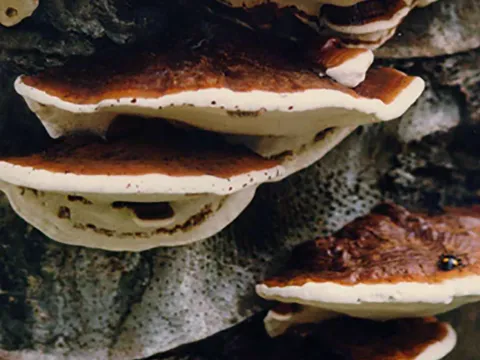
The disease life cycle involves the formation of fruiting bodies, known as basidiocarps, which erupt from the lower stem and release spores into the surrounding air.
The fungus is known for its extreme persistence, capable of surviving in the soil and decaying organic matter for several years after the palm tree has died.
Early symptoms are often subtle, but as the infection progresses, noticeable changes occur in both the canopy and the structural integrity of the stem.
One of the hallmark signs is the yellowing and drooping of younger leaves, which eventually collapse and form a "skirt" around the trunk of the tree.
The presence of shelf-like fungal conks at the base of the stem is a definitive sign of an advanced Ganoderma infection.
Cross-sections of an infected stem reveal severe internal rotting, characterized by a soft, spongy texture and bleached or marbled discoloration of the wood.
In the final stages, the palm tree often loses its structural support and suffers from trunk snapping, leading to total collapse of the plant.
Basal stem rot thrives in tropical regions characterized by high soil moisture levels and consistently warm temperatures throughout the year.
The infection primarily spreads horizontally between palms through root-to-root contact, allowing the fungus to move efficiently within a plantation.
High planting densities in commercial oil palm estates accelerate the rate of spread, as the intertwined root networks facilitate constant pathogen transmission.
Poor soil drainage or areas with high organic matter accumulation can significantly increase the survival and activity of the fungal mycelium.
Disturbance of the soil or damage to the roots during field management practices provides fresh entry points for the pathogen to establish itself.
Basal stem rot is the most economically damaging disease of oil palm, as it is inevitably lethal to infected trees, leading to total yield loss.
As the disease progresses, the tree's photosynthetic capacity drops, significantly reducing the production of fruit bunches long before the tree actually dies.
The economic impact is compounded by the high cost of plantation sanitation and the necessity to replant vast sections of affected land.
The destruction of mature palms results in long-term production gaps, which can threaten the stability of palm oil supply chains in affected countries.
Because there is currently no cure for infected trees, the disease forces a paradigm of prevention and eradication rather than treatment.
The most effective management strategy is rigorous field sanitation, which involves the complete removal of infected palms, including all roots.
Isolating diseased areas by digging deep trenches helps to sever root connections, thereby limiting the further spread of the fungus to healthy neighbors.
Choosing and planting oil palm hybrids that have been bred for partial resistance to Ganoderma is the cornerstone of long-term sustainable management.
Implementing proper soil management and ensuring adequate drainage can create less favorable conditions for the initial establishment of fungal infections.
Continuous monitoring and early detection allow for the rapid removal of symptomatic trees, which is critical to minimizing the inoculum load in the soil.