
Citrus dichorhavirus
Dichorhavirus citri
The primary signs of infection by this virus in citrus crops are specific chlorotic patterns on the leaves. Often, vein yellowing occurs, which eventually spreads across the entire leaf surface, creating a mosaic-like appearance.
What the section contains
Citrus dichorhavirus
Affected plants exhibit significantly slowed vegetative growth, leading to visible stunting. Internodes become shortened, and the overall density of the canopy decreases noticeably compared to healthy specimens.
In the early stages of infection, symptoms may appear locally on individual branches. As the infection progresses, the signs become systemic, affecting the entire above-ground part of the tree.
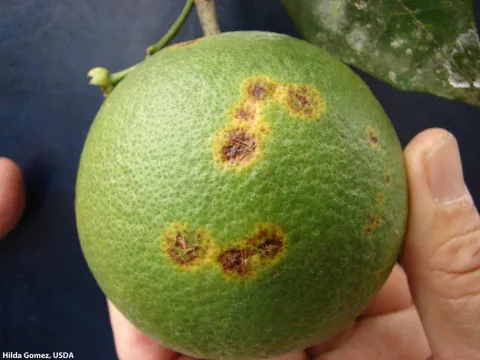
Fruits on infected trees are often deformed and lose their commercial quality. There is a reduction in fruit size, changes in peel coloration, and a decrease in pulp juiciness.
In some cases, the damage leads to necrotic tissue changes. This gradually causes dieback of shoots and a general decline in the plant's physiological condition.
The causal agent is Dichorhavirus citri, which belongs to the genus Dichorhavirus. This is an RNA-containing virus characterized by a bipartite genome and a complex replication strategy.
The viral particles have a rod-like shape and are protected by a lipid envelope. Inside the host cell, the virus actively redirects metabolic processes to synthesize its own proteins.
The primary mode of viral transmission in the natural environment occurs through specific insect vectors. Specifically, citrus flat mites (such as Brevipalpus yothersi) play a key role in the spread.
Transmission of the infection is also possible through the use of infected scion material during grafting. This creates serious risks for nurseries and the further spread of the virus to new territories.
The virus possesses a high capacity for systemic movement through the plant's phloem. Due to this, it rapidly colonizes all organs, including roots and reproductive parts.
The development of the disease directly depends on the activity of insect vectors. Populations of mite vectors thrive most intensely in warm and moderately humid climates.
Temperature ranges between 20 and 30 degrees Celsius are considered optimal for viral replication and vector activity. This period marks the peak of infection spread in orchards.
Poor agricultural practices, such as untimely pruning and a lack of weed control, create favorable conditions for the accumulation of the virus in plantations.
Stress factors, including moisture deficit or inadequate nutrition, weaken the plant's immune system. Stressed trees become more susceptible to viral invasion.
Insufficient phytosanitary cleaning of garden tools is another critical factor contributing to the spread of the virus in both greenhouses and open fields.
The harmfulness of the virus is manifested in a significant reduction in citrus yield. Trees lose their productivity prematurely, resulting in direct economic losses.
Due to tissue degradation, plants become more vulnerable to secondary pathogens, including fungal and bacterial infections. This leads to the accelerated aging of plantations.
Citrus dichorhavirus causes a decline in the organoleptic properties of the fruit. Produce loses market appeal due to small caliber and surface peel defects.
The infection exerts a long-term suppressive effect on plant metabolism. Even if growth is partially maintained, the tree remains a lifelong carrier of the virus.
On a large scale, the virus poses a quarantine threat. The infection of large areas often necessitates the complete replacement of crops and a long quarantine period.
A key protective measure is the exclusive use of certified virus-free planting material. Grafting with healthy scions is the foundation of disease prevention.
Regular monitoring of orchards for the presence of mite vectors is necessary. Upon reaching the threshold population of insects, acaricidal agents should be applied according to regulations.
Strict hygiene of pruning tools is mandatory. It is recommended to disinfect shears and saws after working with each individual tree.
Timely removal and destruction of infected trees showing viral symptoms help limit the infection hotspot. Plants displaying symptoms must be removed from the orchard immediately.
- Regular weeding of virus-reservoir weeds.
- Spatial isolation of new orchards from older, infected plantations.
- Staff training in identifying early-stage symptoms.
- Application of biological products to enhance tree resistance.