
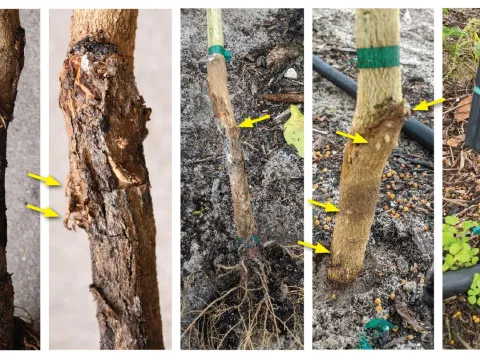
Citrus bark rot
Citrus bark
The causal agent of this disease is the fungus Aspergillus niger, a saprotrophic mold known for its ability to opportunistically infect plant tissues through various wounds.
What the section contains
Citrus bark rot
Citrus bark rot affects a wide range of citrus species, including lemons, oranges, mandarins, and grapefruits, often localizing on trunks, scaffold branches, or root crowns.
It is classified as a bark necrosis or rot that progresses whenever the physical integrity of the outer layers of the plant is compromised by environmental or human factors.
The fungal mycelium penetrates the bark and reaches the cambium layer, effectively disrupting the vascular system and hindering the transport of water and nutrients.
The pathogen can survive in the soil and organic debris for extended periods, posing a persistent threat to trees with weakened natural defenses.
Initial symptoms include dark, black-colored spots on the bark, which eventually become covered with a powdery growth of fungal spores.
As the infection progresses, the affected bark becomes soft, pulpy, and starts to peel away, often accompanied by gum exudation on the surface of the trunk.
Leaves on the affected branches exhibit chlorosis, wilt, and eventually drop off, as the fungal growth blocks the conductive tissues from delivering vital sap.
In advanced stages, cracks appear in the bark, revealing the underlying woody tissue, which is often decayed and may harbor the black sporulation of the pathogen.
The systemic decline of the tree is evident when the disease spreads to the root crown, leading to the gradual death of the entire canopy and eventual tree collapse.
Optimal conditions for disease development involve high humidity and ambient temperatures, typically ranging between +25°C and +30°C.
Dense canopy structures with poor airflow facilitate the accumulation of moisture and provide a perfect environment for spore germination and rapid spread.
Physical injuries caused by farm machinery, pruning, or weather-related damage like frost cracks provide direct entry points for the fungal spores.
Trees suffering from nutrient imbalances, poor irrigation practices, or pest attacks are more susceptible to colonization by Aspergillus niger.
Accumulation of leaf litter and damp organic matter around the base of the tree provides a reservoir for the fungus to persist throughout the year.
The primary damage from citrus bark rot is a significant reduction in fruit quality and quantity, affecting the overall productivity of the orchard.
Structural damage to scaffold branches often requires heavy pruning, which necessitates a significant recovery period for the tree and delays fruit production.
In severe cases, the disease results in the death of the entire tree, representing a total economic loss for the citrus producer.
Infected trees become highly vulnerable to secondary infestations by boring insects and other pests, which further accelerate the tree decline process.
General tree vitality is compromised, making the plants less resilient to environmental stressors such as drought, high wind, or cold winter snaps.
Sanitation is the cornerstone of management: all infected branches and debris must be pruned, removed from the site, and burned to minimize spore loads.
All pruning tools must be disinfected between trees to prevent the mechanical transfer of fungal spores from infected to healthy plant tissues.
Wounds should be scraped to healthy tissue and protected with appropriate wound-sealing pastes or copper-based fungicides to prevent re-infection.
Regular prophylactic fungicide applications, particularly during warm and humid periods, are recommended to protect the trunk and main branches.
Maintaining vigorous plant health through balanced fertilization and precise irrigation helps trees build a natural defense against potential infections.