
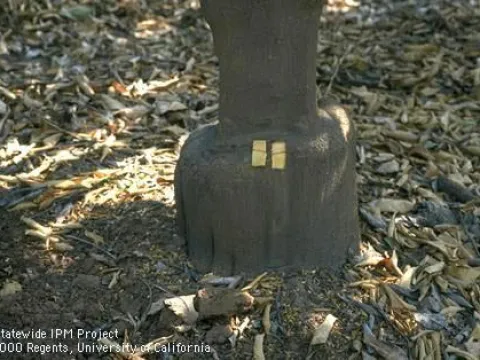
Citrus bud-union incompatibility
Citrus bud-union
The most distinctive external symptom is a sharp growth disparity between the scion and the rootstock, often manifesting as a noticeable swelling, constriction, or bulge at the graft union. The scion may appear significantly larger or smaller than the rootstock, indicating poor vascular connection.
What the section contains
Citrus bud-union incompatibility
Affected trees typically show symptoms of chronic nutrient deficiency, regardless of fertilization. Leaves may become chlorotic, sparse, and shed prematurely, while the tree displays an overall stunted growth habit compared to healthy specimens.
Cracking and peeling of the bark at the graft union are common signs of physical weakness. This structural instability makes the tree highly susceptible to snapping under wind pressure or the weight of its own fruit load.
A cross-section of the graft union often reveals a lack of continuous vascular tissue. In many cases, a necrotic layer or a distinct line of dead cells separates the scion and rootstock, preventing the normal exchange of sap and nutrients.
In advanced stages, the tree may suddenly collapse or die back from the top down. This is usually the result of the gradual starvation of the root system due to the block in the phloem tissue at the union site.
Bud-union incompatibility is not a classic infectious disease but rather a physiological disorder. It arises from genetic, biochemical, or anatomical mismatch between the scion variety and the rootstock, leading to cellular rejection.
The physiological failure occurs when the scion and rootstock tissues are unable to integrate their vascular systems effectively. This process is triggered by discrepancies in the metabolic rates of the tissues, causing internal mechanical stress.
Biochemical toxicity can occur when the scion produces compounds that are incompatible with the rootstock’s chemistry, leading to localized cell death. This prevents the formation of a unified cambial layer, leaving the graft structurally weak.
While often physiological, incompatibility can be compounded by latent viral infections like exocortis or cachexia. These pathogens specifically attack the rootstock, causing bark scaling that mimics or exacerbates the symptoms of graft incompatibility.
The failure of the graft is fundamentally a developmental anomaly where the tissues of different cultivars do not differentiate into compatible xylem and phloem. This disrupts the translocation of water and photosynthates, leading to plant decline.
Incompatibility is frequently caused by using genetically distant scion-rootstock combinations. Even within the same genus, certain cultivars may lack the biological compatibility required for long-term successful grafting.
Poor nursery practices, such as incorrect alignment of the cambium layers during grafting, play a major role in development. If the scion and rootstock are not perfectly aligned, the vascular bridge will be incomplete and vulnerable.
Environmental stress during the healing process, such as extreme heat or drought, slows down the formation of callus tissue. This delay prevents the tissues from fusing properly before the graft is exposed to harsher conditions.
Using rootstocks that are not suited to the local soil or climate causes long-term stress, which often triggers the expression of latent graft incompatibility. Trees may grow normally for several years before symptoms suddenly appear.
The failure to properly manage the binding materials or the use of contaminated tools can introduce secondary complications. This prevents the clean fusion of the scion and rootstock, fostering zones of tissue necrosis.
The primary harm is the early loss of productivity and the reduced lifespan of the orchard. Trees affected by graft failure rarely reach the economic threshold for commercial fruit production.
Weakened trees become susceptible to various opportunistic pathogens and pests. The compromised vascular system prevents the tree from mounting a proper defense, leading to increased maintenance costs and potential loss of the entire plant.
Inconsistent tree performance across a grove makes mechanized orchard management nearly impossible. It creates gaps in the planting rows, resulting in inefficient land use and diminished overall yield.
Financial losses are significant due to the investment in land preparation, planting, and several years of care for trees that will ultimately fail. This creates an unstable and unprofitable agricultural investment.
Widespread incompatibility issues in a nursery represent a systemic failure in quality control. Distributing such saplings to growers causes long-term harm to the regional citrus industry and erodes trust in nursery suppliers.
The most effective management strategy is to strictly adhere to proven, compatible scion-rootstock combinations established by research institutes. Only use certified, disease-free propagation material.
- Consult regional horticultural guides for known compatible citrus combinations.
- Maintain strict hygiene during grafting to avoid introducing viruses.
- Prioritize the selection of virus-indexed rootstocks known for high graft compatibility.
- Ensure adequate irrigation and nutrient support during the crucial post-grafting phase.
- Implement a rigorous culling process in nurseries to eliminate any saplings showing signs of union deformity.
Once a tree shows clear signs of bud-union incompatibility, removal is the only practical option, as the disorder is irreversible. It is better to replace the tree early than to nurture a stunted specimen.
Keep detailed records of all grafted combinations in the orchard. Tracking the performance of specific scions on different rootstocks helps in making informed decisions for future plantings and avoiding past mistakes.