
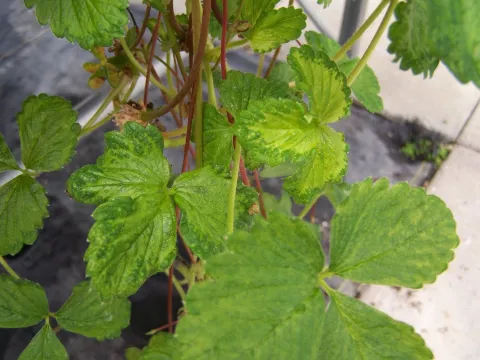
Strawberry pallidosis
Crinivirus palidofragariae
The causative agent of the disease is a virus belonging to the Crinivirus genus, which primarily colonizes the phloem tissues of the strawberry plant.
What the section contains
Strawberry pallidosis
The virus follows a semi-persistent transmission model, meaning the vector—typically aphids—can carry the virus for a limited period after feeding on an infected source.
Once introduced into a plant, the virus becomes systemic, spreading through the vascular system and disrupting the translocation of essential carbohydrates and nutrients.
Infection is permanent; once a strawberry plant is infected, it remains a reservoir for the virus, serving as a source for further spread via insect vectors or propagation.
Detection often requires advanced diagnostic laboratory techniques like RT-PCR or ELISA, as the virus does not always show distinct symptoms immediately upon infection.
The most prominent clinical signs include the appearance of diffuse, pale chlorotic spots on the leaf blades, which often become more pronounced as the plant matures.
Infected leaves frequently exhibit curling, twisting, or other forms of morphological deformation, leading to a reduction in the overall photosynthetic capacity of the plant.
Stunted growth is a hallmark symptom, with infected strawberry plants appearing significantly smaller and less vigorous compared to healthy, uninfected counterparts.
Flower development is often negatively affected, resulting in shorter pedicels, reduced blossom counts, and a subsequent decline in fruit yield and berry size.
In severe cases, the entire plant may show signs of yellowing or pallor, indicating a systemic disruption of plant physiology caused by the prolonged viral stress.
The prevalence of strawberry pallidosis is directly linked to the population dynamics of aphid vectors, which thrive under specific environmental conditions.
Mild to warm temperatures combined with moderate humidity levels create an ideal environment for aphids to multiply and migrate between strawberry patches.
The presence of wild host plants or weeds surrounding the berry field provides a refuge for vectors, ensuring a continuous supply of aphids capable of carrying the virus.
Dense planting configurations increase the likelihood of virus spread, as the reduced distance between plants makes it easier for aphids to move and colonize healthy crops.
Environmental stress factors, such as improper irrigation or poor nutrient availability, can weaken the plant's defense mechanisms, making it more susceptible to viral infection.
The disease poses a long-term threat to strawberry production, often leading to the eventual decline and necessary removal of established, infected plantation blocks.
Viral infection severely reduces the marketability of strawberries by producing berries that are deformed, small, or inferior in flavor and shelf life.
Chronic viral stress compromises the plant's energy reserves, leading to reduced winter hardiness and an increased risk of plant mortality during the dormant season.
Economic damage stems from both direct yield losses and the high costs associated with rigorous pest management and the constant need for new disease-free plant stock.
Because the disease can remain latent for long periods, it often causes hidden damage, silently spreading through a field before the loss in productivity becomes obvious.
The most effective strategy is to establish new fields using only certified virus-free nursery stock produced through tissue culture methods (in vitro propagation).
Integrated Pest Management (IPM) is crucial, focusing on the rigorous monitoring and timely control of aphid populations using targeted insecticide applications.
Aggressive roguing—the immediate removal and destruction of any plant showing suspected symptoms—is essential to eliminate the virus reservoir within the field.
Maintaining a clean cultivation environment by removing weeds and wild hosts reduces the chances of initial vector colonization and subsequent viral transmission.
Implementing spatial isolation between newly established, clean fields and older, potentially infected plantings significantly mitigates the risk of external virus introduction.