
Strawberry potexvirus
Potexvirus fragariae
Description
Symptoms
Signs of Strawberry potexvirus infection are often latent, but under certain conditions, typical viral symptoms may manifest.
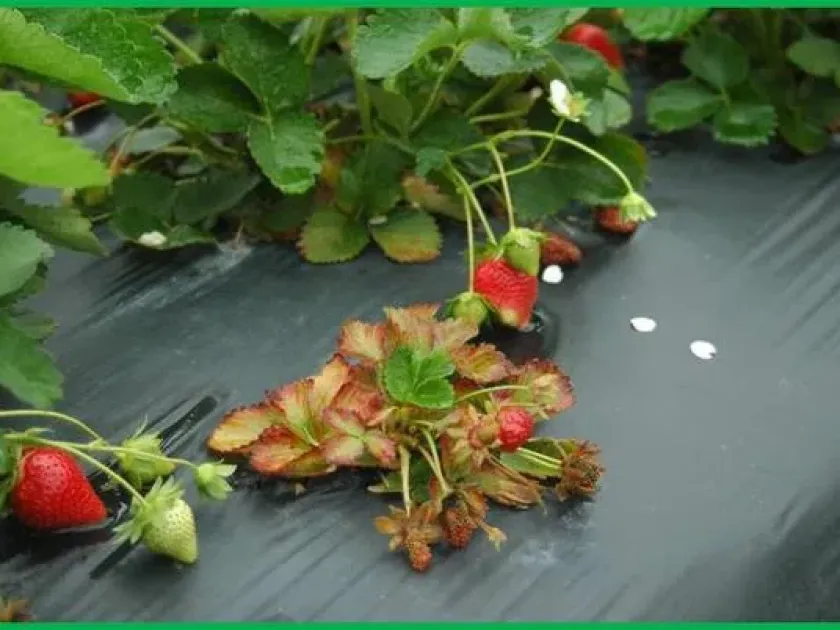
Leaves of infected plants often show chlorosis, appearing as mosaic patterns or small light-colored spots. Over time, affected tissues may become deformed.
General growth stunting is noted, including reduced leaf blade size and shortened petioles. Plants appear weaker and have less foliage compared to healthy ones.
During severe infection, a decrease in flowering intensity is observed. Flower buds may be underdeveloped, and the total number of berries produced is significantly reduced.
Symptoms may vary depending on the strawberry variety and environmental conditions, making visual diagnosis difficult without laboratory confirmation.
Pathogen
The causative agent of the disease is the virus Potexvirus fragariae, which belongs to the genus Potexvirus. This is a plant-pathogenic virus with a single-stranded RNA genome that primarily infects plants of the Rosaceae family.
The virus lacks specific insect vectors, which is a significant difference from many other strawberry viruses. Transmission occurs primarily through mechanical contact during routine field maintenance.
The infectious agent can persist for long periods in the tissues of infected propagation material. This makes the virus extremely dangerous in the context of vegetative plant propagation.
The biology of the virus is closely linked to the physiological processes of the host plant, where it actively replicates, suppressing normal metabolism. High concentrations of virions are observed in all vegetative organs of the plant.
Studies on the genome of Potexvirus fragariae confirm its classification as a group of viruses that are easily transmitted through contact between infected and healthy plant tissues.
Conditions for development
The development and spread of the virus depend heavily on agronomic practices on the farm. The primary risk of infection arises during runner trimming, fruit harvesting, and weeding.
Tools used for crop maintenance are the main vectors for virus transmission if they are not disinfected after contact with an infected plant.
The virus also spreads through the use of infected planting stock. Purchasing virus-free certified seedlings is a critical factor for effective control.
High humidity and overcrowded planting patterns promote closer contact between leaves, facilitating the transfer of viral particles during mechanical injury.
Temperature regimes during the active growing season influence the rate of viral movement through the plant's vascular system, exacerbating the systemic nature of the infection.
Why it matters
The harmfulness of the potexvirus lies in the significant reduction of productivity in strawberry fields. Infected plants yield far fewer marketable fruits.
The virus weakens the plant, making it more susceptible to other fungal and bacterial diseases, which often leads to the premature loss of the entire stand.
Reduced fruit quality, including small size and deformation, makes the harvest unsuitable for the fresh market.
The gradual accumulation of the virus in propagation nurseries leads to cultivar degeneration, necessitating the complete replacement of planting material on the farm.
Economic losses consist of costs for constant monitoring, roguing of infected specimens, and overall loss of yield potential per hectare.
Protection
The primary method of control is the use of high-quality, certified planting material that is guaranteed to be free of viral infections.
Strict hygiene protocols during field operations are mandatory. All tools must be regularly disinfected using alcohol solutions or sodium hypochlorite.
Regular phytosanitary monitoring of the field allows for the early detection and immediate removal of infected plants, including the root system, to prevent spread.
Effective weed control within and around the field reduces the risk of accidental mechanical transmission by insects or farm equipment.
Preventive measures include the establishment of isolated nurseries and periodic plant testing using ELISA or PCR methods to rule out asymptomatic viral carriage.
Discussion
No discussions yet — be the first.