
Rubodvirus
Rubodvirus
Rubodvirus is a genus of plant viruses classified under the family Betaflexiviridae. These are RNA viruses known for infecting various plant species within the Grossulariaceae family, particularly currants (Ribes).
What the section contains
Rubodvirus
The virus particles exhibit a typical filamentous, flexible morphology. Once inside the host cell, the virus initiates replication, effectively hijacking the plant's metabolic pathways to produce viral proteins and nucleic acids.
Rubodvirus systemically invades the host plant, moving through the vascular system (phloem and xylem). This allows the pathogen to distribute itself throughout the roots, stems, and leaves of the infected specimen.
The transmission is primarily achieved through vegetative propagation. Using infected cuttings, rootstocks, or scions serves as the main conduit for spreading the virus throughout commercial plantations.
The pathogen is often characterized by a long latent period, where infected plants do not show immediate signs of disease, allowing the virus to accumulate in the host tissues unnoticed for several growth cycles.
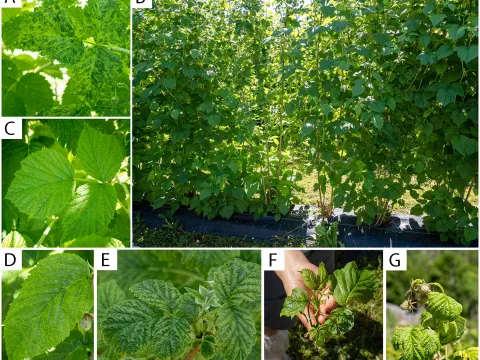
The symptoms of Rubodvirus infection often manifest as foliar changes, including chlorosis, mosaic patterns, and vein banding. These symptoms are usually most prominent during the active growing season.
Infected plants frequently exhibit stunted growth. Internodes become shortened, and the overall architecture of the shrub becomes distorted, giving the plant a weakened and sickly appearance.
Deformation of the leaf blade is a hallmark of the infection. The leaves may curl or develop necrotic spots, which significantly reduces the leaf surface area available for photosynthesis.
Fruit production is heavily impacted; infected bushes produce significantly fewer berries, and the fruits themselves are often smaller, deformed, and have inferior sensory qualities compared to healthy counterparts.
- Mosaic spotting and mottling on leaves
- Stunted shoot growth and shortened internodes
- Leaf curling and deformation
- Reduced fruit set and berry quality
- Premature leaf senescence
The primary driver for the spread of Rubodvirus is the use of infected planting stock. Without strict phytosanitary protocols, the virus can be introduced into new plantations through contaminated nursery materials.
Environmental stress factors, such as extreme temperature fluctuations, drought, or nutrient deficiencies, weaken the plant's resistance, making it easier for the virus to spread systemically throughout the host tissue.
Mechanical transfer is a major risk factor in modern agriculture. The use of contaminated pruning tools is a common way to transmit the virus from a single infected plant to the entire row.
The presence of insect vectors, such as aphids and mites, can facilitate the spread of the virus. These insects acquire the virus during feeding and transmit it when moving to healthy plants, creating clusters of infected bushes.
Active growing periods, characterized by high sap flow, are the most critical times for the viral pathogen to disseminate within the plant tissues, leading to a faster appearance of symptoms.
The economic impact of Rubodvirus is substantial, as viral infections in perennial berry crops lead to a progressive decline in yield and plant vigor, ultimately resulting in the loss of the plantation.
There is currently no chemical cure for Rubodvirus. Once a plant is infected, the condition is chronic, and the plant remains a reservoir for the virus, threatening adjacent healthy shrubs.
The virus causes a reduction in the overall longevity of the crop. Infected bushes often fail to recover their productivity, necessitating premature removal and replanting, which incurs significant costs for growers.
Beyond yield loss, the infection compromises the plant's structural integrity and its ability to withstand secondary attacks by fungi or bacteria, leading to a synergistic decline in plant health.
Marketability is severely damaged because the deformed and low-quality berries do not meet standard requirements, causing financial losses for agricultural producers and nurseries.
The most effective strategy for managing Rubodvirus is strict prevention. Growers must ensure that all new plantings originate from certified virus-free nursery stock produced via in vitro propagation.
Early detection and rogueing are essential. Any plant showing symptoms of infection should be immediately removed from the field and destroyed by burning to prevent further transmission.
Sanitation of tools is critical. Pruning equipment must be disinfected after working on each individual plant to prevent the mechanical transmission of viral particles between healthy and infected bushes.
Integrated Pest Management (IPM) practices aimed at controlling populations of aphids, mites, and other potential vectors are necessary to reduce the risk of secondary infections in the plantation.
Regular monitoring of plant health throughout the season is vital for the early identification of potential outbreaks, allowing for rapid response and containment measures to protect the integrity of the crop.