
Rose rosette virus
Emaravirus rosae
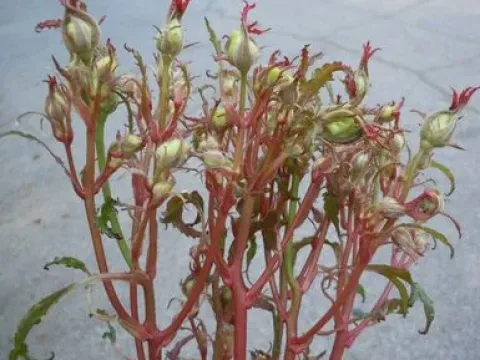
The most distinctive symptom of Rose Rosette Virus is the formation of rapid-growth, stunted shoots often referred to as 'witches' brooms'. These shoots appear thickened, succulent, and deep red in color, bearing distorted foliage.
What the section contains
Rose rosette virus
Leaves on infected canes are usually smaller than normal, asymmetrical, and exhibit a mosaic pattern with chlorotic spots or mottling. Internodes are severely shortened, leading to a rosetted appearance of the leaves at the tips of the shoots.
Flower production is significantly reduced or inhibited entirely. When flowers do appear, they are often malformed, fail to open fully, or display abnormal coloration compared to the healthy parent plant.
The disease weakens the overall vigor of the rose bush, making it increasingly susceptible to winter kill and other environmental stresses. As the virus spreads throughout the plant's vascular system, the decline becomes systematic and permanent.
Visual diagnosis is often confused with chemical injury, specifically herbicide damage or spider mite infestation. Therefore, molecular testing through PCR analysis is highly recommended for definitive confirmation of the virus presence.
The pathogen is Emaravirus rosae, an RNA virus that exclusively infects roses. It is transmitted in nature by the eriophyid mite Phyllocoptes fructiphilus, which acts as the primary vector for the disease.
The virus particles are introduced into the host tissue during the mite's feeding process. Once established, the virus moves systemically through the plant's phloem, spreading into the meristematic tissues where it interferes with growth regulation.
Because the virus is systemic, it infects all parts of the plant, including roots and dormant buds. There is no known method for "curing" an infected plant; the pathogen remains within the host for the duration of its life.
The virus does not spread through soil, water, or standard pruning tools. However, the movement of the eriophyid mite vector from infected to healthy plants is the single most important factor for the disease's transmission.
The viral genome is segmented, which contributes to its biological stability and ability to maintain chronic infection in rose species across different climates and environments.
The spread of the disease is strictly dependent on the lifecycle of Phyllocoptes fructiphilus. These mites thrive in warm, dry weather conditions, which align with the peak activity periods of the mite in late spring and summer.
High-density rose plantings allow for easy mite movement from plant to plant. Poor air circulation and crowded conditions exacerbate the risk of infestation, making it easier for the virus to jump between hosts.
The mites are microscopic and are easily carried by air currents, meaning that infections can spread from wild multiflora roses or neighboring infested gardens. Proximity to infected rose patches is a high-risk factor.
While the virus itself does not require specific environmental conditions to survive, the activity level of the vector is heavily influenced by temperature. Warmer climates allow for faster mite reproduction, potentially leading to more rapid spread.
Successful infection often depends on the duration of feeding by the mite on the host. Once a mite begins feeding on an infected plant, it can carry and transmit the virus for the remainder of its lifespan.
The primary harm is the complete loss of the ornamental value and the eventual death of the rose bush. Once the virus symptoms appear, the plant is effectively useless for display or garden design.
In the nursery industry, this disease causes devastating economic losses. Because the virus is highly infectious to neighboring healthy plants, nurseries must discard all stock associated with an outbreak to prevent further spread.
The virus interferes with the host's ability to photosynthesize effectively, leading to stunted root development and poor nutrient uptake. This physiological decline makes the plant unable to survive ordinary maintenance.
The presence of the virus significantly limits the diversity of roses that can be grown in a particular region. In areas with high mite populations, growing susceptible rose varieties becomes virtually impossible.
Beyond individual plants, the virus creates a cycle of infection that persists in the environment if wild or abandoned roses are not managed correctly, causing recurring problems for local gardeners.
The only effective control method currently available is the immediate removal of symptomatic plants. Once a rose shows signs of rosette, it should be dug up, including the roots, and disposed of immediately.
Managing the mite vector is essential for prevention. This involves applying systemic or contact acaricides during the spring and early summer when mite populations are most active and migrating between plants.
Sanitation is key; keeping garden beds free of weeds and maintaining good distance between rose bushes can reduce the efficiency of mite transfer. Wild roses near the garden should also be cleared.
There is no known chemical treatment to kill the virus within the plant. Efforts should focus on population management of the vector and rigorous inspection of new plants introduced to the landscape.
- Regular monitoring for witches' broom symptoms
- Prompt removal of diseased bushes
- Application of miticides targeting eriophyids
- Avoidance of susceptible cultivars in high-risk areas
- Careful disposal of infected biomass