
Rose mosaic ilarvirus
Ilarvirus lrmv
The causal agent is the Rose mosaic virus, a member of the Ilarvirus genus. This virus possesses a tripartite single-stranded RNA genome and is known for its ability to cause systemic infection in rose plants.
What the section contains
Rose mosaic ilarvirus
This is a strictly viral disease. Once the virus enters the plant's vascular system, it spreads throughout the entire organism, incorporating its genetic material into the host's cells for the duration of the plant's life.
Transmission primarily occurs through grafting. Using infected rootstocks or scions from symptomatic bushes is the most common way for the virus to enter a new collection or nursery environment.
Mechanical transmission is also a significant factor. The virus can be easily transferred via contaminated pruning tools, such as secateurs, knives, or saws, if they are not cleaned after use on an infected plant.
The host range is largely specific to the Rosa genus. All varieties, including hybrid teas, climbers, and floribundas, are susceptible to this virus, making it a universal threat to rose growers worldwide.
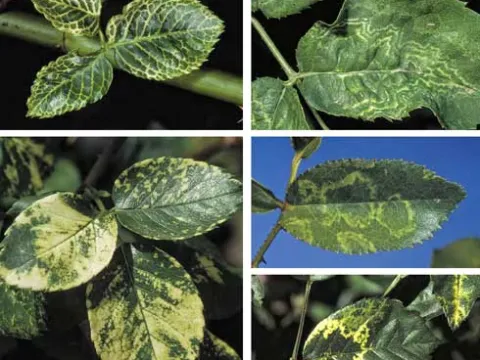
The most distinctive sign is the mosaic pattern on the leaves. This manifests as chlorotic mottling, yellow rings, wavy lines, or zigzag patterns that stand out vividly against the normal green tissue.
Symptoms are systemic, often affecting a large portion of the foliage on the plant. Occasionally, leaves may exhibit distortion, crinkling, or stunted development, which detracts significantly from the plant's natural beauty.
Flower symptoms include irregular color patterns, such as streaks or color breaking in the petals. This reduces the commercial and aesthetic value of the blooms, making the plant undesirable for display.
The intensity of visible symptoms is highly variable and depends on temperature and variety. In cooler spring conditions, symptoms are usually at their peak, while during hot summer days, they may fade or become invisible.
Distinguishing mosaic from nutritional deficiencies is crucial. Unlike nutrient-related chlorosis, which usually appears uniformly on leaves of the same age, viral mosaic shows a scattered, chaotic, and often asymmetrical pattern.
The spread of the disease is predominantly human-driven through nursery practices. If the mother plant used for budding or grafting is infected, all progeny will inherently carry the virus from day one.
Environmental conditions like cool temperatures and high humidity tend to accentuate the symptoms. Under these conditions, the virus replication and the resulting metabolic interference within the leaf tissue become more pronounced.
Temperature serves as a mask for the disease. During stable high-temperature periods, the symptoms may be masked, which can lead gardeners to mistakenly believe the plant has recovered, even though the virus remains active.
Mechanical wounding is a necessary condition for the spread of the virus between existing bushes. Any tool that breaks the plant tissue of an infected rose becomes an immediate vector if reused without sterilization.
The virus persists in the sap and tissue of the rose, meaning that even if external symptoms vanish due to heat, the plant remains a dormant but permanent reservoir of the infection.
The main impact is the gradual decline of the plant's overall vigor. Growth rate is typically reduced, leading to shorter shoots and a generally unthrifty, stunted appearance compared to healthy specimens.
Infected roses often show decreased winter hardiness. The metabolic stress caused by the virus weakens the plant's ability to store sufficient carbohydrates for dormancy, making them prone to cold injury.
There is a higher susceptibility to secondary infections. Viruses weaken the plant's natural immune response, making them more vulnerable to fungal diseases like black spot and powdery mildew, increasing chemical dependency.
Economic damage is substantial in the nursery industry. Entire batches of roses can be deemed unsaleable if mosaic symptoms appear, leading to significant financial losses for producers and distributors.
Over several years, the accumulation of viral particles causes a decline in the cultivar's quality. Eventually, the plant becomes so degenerate that it fails to produce blooms of standard quality and must be removed.
The most reliable control measure is the use of certified virus-free planting material. Always purchase rose bushes from reputable nurseries that perform viral testing on their mother stock.
Maintain strict tool hygiene. After working with a plant, especially if it is suspected of being diseased, disinfect all tools using 70% ethanol or a 5-10% bleach solution to prevent transmission to the next bush.
If a bush is confirmed to have rose mosaic, the best practice is to rogue (remove and destroy) the plant entirely. There is no curative chemical treatment for the virus, and the infected bush will remain a permanent source of inoculum.
Manage insect populations in the garden. While insects are not the primary vectors for this ilarvirus, they weaken the plants and can create minor mechanical wounds that provide entry points for the virus.
Regular monitoring during the spring growth flush is essential. Early identification and immediate removal of symptomatic plants help preserve the health of the entire collection and prevent local outbreaks.