
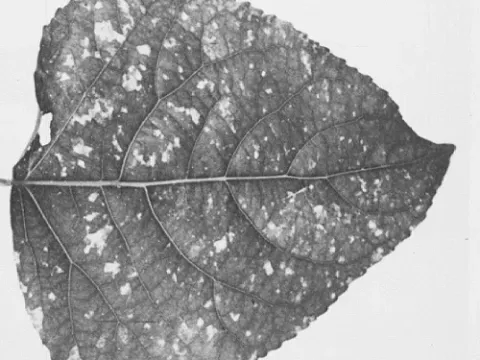
Poplar mosaic
Carlavirus populi
The disease is caused by the virus Carlavirus populi, a plant pathogen belonging to the Betaflexiviridae family. It specifically affects trees within the Populus genus.
What the section contains
Poplar mosaic
The virus consists of flexuous filamentous particles that invade the host plant's cells. Once inside, it hijacks the cell's metabolic machinery to replicate its genetic material.
As a systemic pathogen, it moves throughout the tree via the phloem, eventually reaching all tissues, including leaves, stems, and roots. This systemic nature makes the infection permanent.
Transmission occurs primarily through vegetative propagation using infected cuttings or grafting. In nature, aphids act as the primary vectors, carrying the virus from plant to plant.
Poplar mosaic is highly prevalent in forest nurseries where large quantities of clonal materials are propagated. Once a clone is infected, the virus is often passed to all subsequent generations.
The most distinctive symptom is a mosaic pattern on the leaves, characterized by irregular patches of light green, yellow, and normal dark green coloration.
Leaves often show visible deformation, including crinkling, cupping, or wavy margins. In severe cases, chlorotic patterns develop along the leaf veins.
Growth reduction is a common indicator of the disease. Infected saplings often exhibit stunted growth, shorter internodes, and a general lack of vigor compared to healthy trees.
Some poplar species may display ring spots or thin chlorotic lines on the leaves. These symptoms are most pronounced during the active spring growth phase.
In late summer or autumn, infected trees may show premature leaf yellowing and early leaf drop. This indicates that the tree's physiological processes are significantly disrupted.
Viral spread is significantly facilitated by warm, moist weather conditions, which support the population growth of aphids and other sap-sucking insect vectors.
High planting density in nurseries significantly increases the rate of transmission. When canopies touch, the movement of vectors between trees becomes extremely rapid.
Mechanical operations, such as pruning or taking cuttings, create wounds that serve as entry points for the virus if the tools have been contaminated by sap from infected trees.
Environmental stress, such as drought or poor soil nutrition, makes trees more susceptible to the impact of the virus, exacerbating the visible symptoms and physiological damage.
The lack of proper hygiene practices in nursery management, such as failing to disinfect tools, is a primary driver for the widespread distribution of the virus in new plantations.
The primary economic impact is the reduction in timber quality and volume. Because the virus impairs photosynthesis, infected trees produce significantly less wood biomass.
In nursery settings, the infection leads to high rejection rates of saplings, causing substantial financial losses for foresters and growers who rely on healthy stock.
Infected trees show increased susceptibility to secondary infections. Weakened by the virus, they are more easily killed by fungal pathogens, cankers, or wood-boring insects.
For ornamental or urban poplar plantings, the mosaic pattern and premature leaf drop reduce the aesthetic value, making the trees unsuitable for landscaping purposes.
Chronic infection results in a gradual decline of the tree's health, leading to dieback of branches and, in some cases, the total death of the tree after several growing seasons.
The most important control measure is the use of virus-free planting stock. Certification programs ensure that cuttings are tested and free from the Carlavirus before planting.
Strict sanitation protocols must be followed. Any trees showing symptoms should be immediately removed and destroyed to prevent the virus from spreading to neighboring plants.
Managing vector populations, particularly aphids, through timely insecticide application in nurseries is essential to interrupt the transmission cycle of the virus.
Disinfection of all pruning and grafting tools is mandatory. Using alcohol or other effective sanitizers between every tree significantly reduces the risk of mechanical transmission.
Breeding for resistance is the ultimate goal. Developing and selecting poplar clones that have natural resistance to the virus is the only sustainable long-term solution.