
Polerovirus
Polerovirus
Polerovirus is a genus of plant viruses within the family Solemoviridae. These viruses possess a single-stranded RNA genome and are strictly phloem-limited, meaning they replicate exclusively in the plant's nutrient-conducting tissues.
What the section contains
Polerovirus
Transmission is not mechanical or seed-borne; instead, it relies entirely on aphid vectors. The virus is acquired by aphids while feeding and remains in the insect's system, allowing for persistent transmission to healthy plants.
Once introduced into the phloem, the virus disrupts the translocation of photoassimilates. This systemic interference impacts the overall development of the plant, from the root system to the fruit.
Poleroviruses are known for their high stability within their aphid hosts. This persistent relationship ensures that a single infected aphid can transmit the virus for most of its lifespan.
Diagnostic tools like ELISA and molecular markers are vital for identifying specific strains, allowing farmers to adapt their management strategies according to local disease prevalence.
Common symptoms of Polerovirus infection include leaf chlorosis, which often appears first on older leaves. In many host species, the leaves exhibit characteristic yellowing between the veins.
Stunting and leaf curling are hallmark signs of infection. Infected leaves often become brittle or leathery, indicating a severe disruption in plant metabolism and hormonal balance.
In the field, infected plants typically appear in patches, reflecting the distribution of aphid colonies. Symptoms are often exacerbated during periods of active plant growth and favorable weather for aphids.
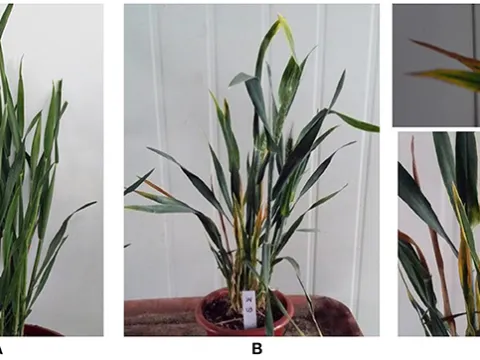
Root crops may show malformed foliage and reduced storage capacity. In cereals, infection manifests as reddening or yellowing of the leaf tips, which is sometimes misidentified as a nutrient deficiency.
In severe cases, phloem necrosis can occur, leading to stunted growth and, ultimately, crop failure. Early-stage detection is difficult because symptoms may be masked by other environmental stressors.
The development and spread of Polerovirus are fundamentally linked to the population dynamics of aphid vectors (Aphididae). High aphid density directly correlates with an increased risk of viral infection.
Mild temperatures and high humidity promote the rapid reproduction of aphids. When winged aphids migrate, they carry the virus across large distances, often initiating primary infection centers in new fields.
Weed hosts and volunteer plants act as essential reservoirs for the virus during the off-season. These plants allow the virus to persist in the landscape even in the absence of primary crops.
Plants under nutrient stress are often more susceptible to aphid infestation. Proper field management and fertilization can help maintain plant vigor, potentially reducing the severity of viral impact.
Large-scale monocultures of susceptible varieties create high-risk environments where the virus can spread quickly if vector control measures are not implemented in time.
The economic impact of Polerovirus is significant, primarily due to reduced crop quality and quantity. Yield losses can vary widely, often ranging from 30% to 80% depending on when the infection occurs.
Infection in the early stages of plant development often results in total crop loss due to permanent stunting. This forces growers to replant or suffer diminished returns on their investment.
The marketability of produce is heavily compromised; fruits and tubers from infected plants often have lower sugar content, altered nutritional profiles, and poor visual quality.
Farmers face substantial costs associated with continuous aphid monitoring and insecticide applications. These management efforts are necessary but increase the overall production cost.
The persistence of the virus in the surrounding ecosystem makes it difficult to eliminate entirely, requiring long-term planning and coordination with neighboring agricultural enterprises.
Managing Polerovirus requires a multi-faceted approach, focusing on vector control and the removal of infection sources to minimize disease pressure.
- Selecting resistant or tolerant crop varieties.
- Monitoring fields with yellow sticky traps to track aphid migration.
- Implementing timely insecticide programs to control aphid populations.
- Eliminating weeds and volunteer plants that serve as virus reservoirs.
- Following strict crop rotation practices to break the disease cycle.
Biological control, such as fostering populations of natural aphid predators like ladybirds and lacewings, can provide a sustainable way to suppress pest numbers.
Adjusting planting dates can help ensure that young, highly susceptible plants avoid the peak migration periods of the aphid vectors.
Field sanitation remains a cornerstone of prevention; removing post-harvest residues effectively reduces the pool of available virus particles for the next season.