
Pospiviroidae
Pospiviroidae
Pospiviroidae is a family of infectious agents consisting of small, circular, single-stranded RNA molecules that lack a protein coat (capsid). They represent some of the most simple life forms capable of parasitizing plants.
What the section contains
Pospiviroidae
The pathogen does not encode its own proteins; instead, it relies entirely on the host's cellular machinery for replication. This process typically takes place within the cell nucleus.
The diseases caused by this family are referred to as viroid infections. The most prominent member is the Potato Spindle Tuber Viroid (PSTVd), which is a major concern in global agriculture.
These viroids are systemic, meaning they move through the plant's phloem and colonize all tissues, effectively hijacking the host plant's metabolic resources.
A key biological characteristic of Pospiviroidae is their high stability in the environment, allowing them to remain infectious on surfaces, tools, and packaging materials for extended periods.
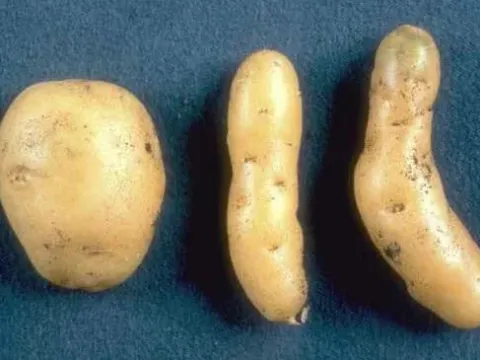
The hallmark symptom of Pospiviroidae infection is the morphological deformation of plant organs. In potatoes, this manifests as tubers becoming spindle-shaped, elongated, or stunted.
Above-ground parts of the plant often show signs of severe physiological stress, including leaf curling, reduced leaf size (stunting), and chlorosis (yellowing).
In tomato plants, viroids lead to significant fruit deformation, stunted growth, and specific leaf distortions, often making the plant look bushy and underdeveloped.
Symptoms can often be latent, especially during hot weather conditions, meaning the plant acts as a reservoir without showing visible signs of the infection.
- Elongated or distorted tubers and fruits
- Severe stunting of the entire plant
- Leaf yellowing, curling, and malformation
- Reduced flowering and fruit set
Transmission of Pospiviroidae is primarily mechanical. It occurs through contaminated farming tools such as knives used for seed potato cutting, cultivators, and other harvest equipment.
Insects such as aphids, whiteflies, and leafhoppers play a significant role in spreading the infection by acting as vectors during their feeding process on host plants.
Physical contact between neighboring plants in high-density fields can lead to the transmission of the pathogen through touching roots or leaves, facilitating field-wide spread.
Transmission through seeds and pollen is another critical pathway, enabling the long-distance spread of the viroid and the contamination of clean agricultural areas.
High ambient temperatures favor the replication of the viroid RNA, often leading to more pronounced symptoms and faster disease development within the host population.
The economic impact of Pospiviroidae is severe, as it causes massive reductions in crop yields, often resulting in losses ranging from 30% to over 70% in sensitive cultivars.
The quality of the produce is heavily compromised; tubers and fruits lose their commercial value due to deformation, making them unsuitable for consumer markets.
Seed certification programs face significant challenges because infected material cannot be rehabilitated, leading to the necessary destruction of entire lots.
Due to the wide range of solanaceous hosts, Pospiviroidae pose a constant threat to various vegetable industries, including potatoes, tomatoes, and peppers.
Because there are no curative treatments available for infected plants, early detection and rigorous sanitation are the only ways to mitigate long-term economic damage.
The most effective strategy for managing Pospiviroidae is the exclusive use of certified, disease-free seed and planting materials sourced from reputable suppliers.
Strict sanitation protocols must be maintained on the farm, including the frequent disinfection of all cutting tools and machinery using specialized antiviral/viroidal solutions.
Rogueing—the systematic removal and destruction of symptomatic or suspected infected plants—is essential to prevent the spread of the pathogen within the field.
Effective management of insect vectors through integrated pest management (IPM) helps to significantly reduce the risk of secondary transmission during the growing season.
Practicing crop rotation and maintaining adequate spatial isolation between new and old Solanaceae plantings are fundamental requirements for long-term farm biosecurity.