
Pospiviroid
Pospiviroid
Pospiviroids (family Pospiviroidae) are a group of small, circular, single-stranded RNA pathogens that lack any protein coat or mRNA-like characteristics.
What the section contains
Pospiviroid
They act as obligate intracellular parasites that hijack the host plant's transcriptional machinery, specifically RNA polymerase II, to replicate their RNA genome.
These pathogens are highly stable in the environment and can persist on surfaces, soil, and debris for extended periods, making them difficult to eradicate.
The most significant member of this family is the Potato spindle tuber viroid (PSTVd), which serves as a major model for research into non-coding RNA pathogenesis.
Reproduction occurs primarily through rolling-circle replication, which leads to the accumulation of high concentrations of pathogenic RNA within the host cells.
Symptoms of pospiviroid infections are highly variable and often mimic nutritional deficiencies, hormonal imbalances, or other viral diseases.
Common clinical signs include stunting, chlorosis of leaves, distortion, curling, and a general reduction in plant vigor and biomass accumulation.
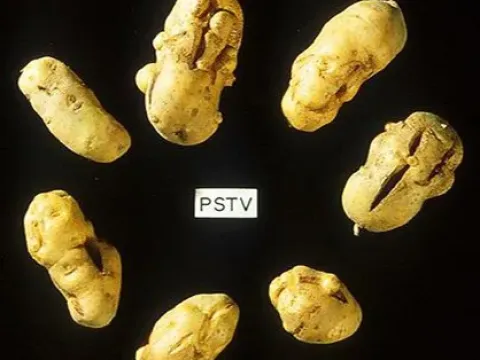
In tuberous crops, tubers often exhibit typical deformation such as spindling, cracking, and irregular skin patterns that render the harvest unmarketable.
In tomato and pepper crops, infected plants frequently show shortened internodes, bushy growth patterns, and reduced flower and fruit set.
Symptoms may be latent in some cultivars, allowing the viroid to be disseminated unknowingly through infected seeds and vegetative propagation material.
Pospiviroids thrive in warm temperatures, which facilitate their rapid replication within host cells and often exacerbate symptom expression in the field.
The primary route of transmission is mechanical, involving contact with contaminated agricultural tools, machinery, or even handling during routine crop maintenance.
Seed-borne and pollen-borne transmission play a critical role in the long-distance spread of these pathogens across different growing regions.
The density of planting in greenhouse environments significantly increases the probability of spread, especially when pruning and harvesting are conducted manually.
Certain insects, such as aphids, can occasionally contribute to the transmission process, though mechanical injury remains the most significant vector pathway.
Pospiviroids are responsible for substantial economic losses in agriculture, often leading to severe yield reductions and total rejection of infected produce.
The infection negatively impacts the physiological state of the crop, leading to increased susceptibility to secondary fungal, bacterial, and viral pathogens.
Long-term use of infected vegetative stocks leads to progressive degradation of crop quality, resulting in a loss of vigor and yield potential over generations.
The lack of chemical or biological curative treatments makes pospiviroid management costly, often requiring the culling of entire batches of nursery or seed stock.
Global trade is heavily restricted by quarantine regulations associated with pospiviroid presence, creating logistical and financial hurdles for growers.
The most effective strategy is the exclusive use of certified, viroid-free seed and vegetative propagation material produced through meristem culture.
Rigorous sanitation protocols, including the disinfection of tools with bleach or specialized virucidal agents, are essential to prevent mechanical transmission.
Regular diagnostic screening, such as RT-PCR or ELISA, is necessary to identify and eliminate infected plants from nurseries and production fields.
Implementing strict access controls in greenhouse facilities and enforcing hygiene standards among workers significantly reduces the risk of accidental spread.
Integrated Pest Management (IPM) practices, including the control of weed reservoirs and potential insect vectors, support a comprehensive preventative approach.