
Solanaceous begomovirus
Begomovirus solanumparvi
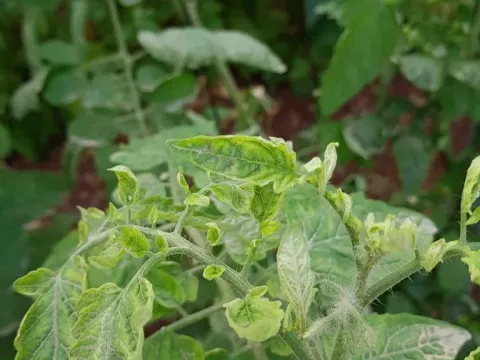
The primary visual symptom of infection is severe leaf curling, distortion, and crinkling of the foliage in susceptible crops.
What the section contains
Solanaceous begomovirus
Leaves often exhibit chlorotic patterns, mosaic symptoms, or yellowing along the veins, significantly reducing photosynthetic area.
Plant growth is severely stunted, with shortened internodes causing the plant to develop a compact, bushy, or rosette appearance.
Flowering is usually reduced, and the plant often fails to set fruit or exhibits premature flower and fruit drop due to physiological stress.
Fruits that do develop on infected plants are often small, misshapen, and possess poor market quality, rendering them unsuitable for sale.
The disease is caused by viruses belonging to the genus Begomovirus within the Geminiviridae family, featuring single-stranded DNA.
These viruses are characterized by a unique twinned (geminate) capsid structure, which contributes to their stability and successful transmission.
The primary vector for these pathogens is the whitefly (Bemisia tabaci), which transmits the virus in a persistent, circulative manner.
Once a whitefly acquires the virus from an infected host, it remains capable of transmitting the pathogen for the duration of its lifespan.
The virus replicates within the phloem tissues, systemically invading the plant and causing profound physiological imbalances.
Warm and dry weather conditions favor the rapid proliferation of whitefly populations, leading to increased pressure of viral transmission.
The migration of adult whiteflies from wild reservoir hosts or infested weeds into commercial vegetable fields triggers new infections.
Failing to implement crop rotation or sanitation practices allows the virus to persist in crop residues and alternative host plants.
High humidity and stagnant air within greenhouses create an ideal microenvironment for whitefly development and subsequent viral spread.
The presence of unmanaged weedy fields near cultivation sites serves as a constant source of inoculum for the primary vector.
The economic impact of begomoviruses is severe, often resulting in significant yield losses or total crop failure in susceptible cultivars.
Early-stage infections are particularly devastating, as they inhibit the plant's ability to reach reproductive maturity or develop quality fruit.
Plants weakened by the virus become more vulnerable to opportunistic secondary infections by fungi, bacteria, and other pests.
Control costs escalate due to the necessity of repeated insecticide applications to suppress the vector population throughout the season.
Regional outbreaks can threaten the local vegetable industry, leading to trade restrictions and the enforcement of strict phytosanitary measures.
Effective management relies primarily on the rigorous control of whitefly populations using integrated pest management strategies.
Growers should source and utilize certified, virus-free seeds and transplants to ensure initial protection of their crops.
Maintaining spatial separation between older fields and new plantings is essential to break the cycle of viral transmission.
- Removal and destruction of weeds that serve as viral reservoirs.
- Use of insect-proof screening for greenhouses to exclude whiteflies.
- Prompt rogueing and disposal of symptomatic plants to reduce inoculum.
Breeding and planting resistant or tolerant hybrid varieties is the most sustainable approach to managing begomovirus-related diseases.