
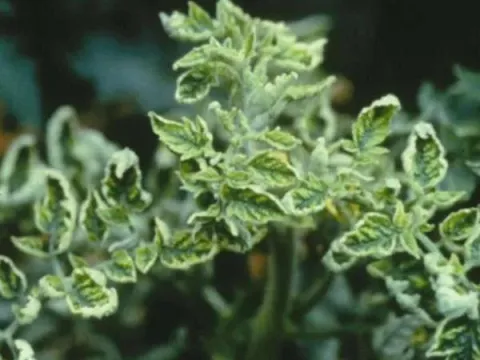
Solanaceous leaf curl virus
Begomovirus solanumpallidivariati
The causative agent belongs to the genus Begomovirus, a group of viruses containing single-stranded DNA that rely on specific insect vectors for transmission.
What the section contains
Solanaceous leaf curl virus
The primary vector for this viral disease is the whitefly Bemisia tabaci, which acquires the virus through feeding on infected sap and retains the ability to transmit it.
These viruses are host-specific to various members of the Solanaceae family, including tomatoes, peppers, eggplants, and potatoes, leading to systemic infections.
The virus particles localize within the plant phloem, where they disrupt the vascular tissue and interfere with the normal transport of carbohydrates and essential nutrients.
Viral replication occurs within the plant cells, triggering a physiological response that manifests as the characteristic morphological deformations observed in affected crops.
The hallmark of the disease is the upward curling of leaves, which often become leathery, stiff, and brittle to the touch during the progression of the infection.
Affected plants exhibit significant stunting, with shortened internodes and a bushy appearance that distinguishes them from healthy, vigorous specimens.
Leaf tissues may develop chlorosis or yellowing along the margins, while the veins may appear swollen or darkened compared to the rest of the leaf blade.
Flowering is severely impaired; the plants produce fewer flowers, which often abort before fruit set, resulting in drastic yield reductions.
If fruits do manage to develop, they are typically undersized, malformed, and lack the nutritional quality and aesthetic appeal required for commercial sale.
The development of the disease is strictly dependent on the population density of the whitefly vector, which thrives in warm and humid conditions.
Periods of high temperature accelerate the life cycle of the whitefly, leading to a rapid increase in the number of potential infection points across a field.
The presence of wild reservoirs or weed hosts near agricultural plots ensures the survival of the virus throughout the year, even in the absence of crops.
Poor sanitation practices, such as failing to remove crop residues or neglected weed management, facilitate the migration of virus-carrying insects into new plantings.
High-density greenhouse environments create a closed ecosystem where the absence of natural predators allows the whitefly population to explode, causing severe outbreaks.
The economic impact of the Solanaceous leaf curl virus is profound, as it can cause total yield failure in susceptible varieties if infection occurs early in the season.
Beyond quantity, the quality of produce is degraded, rendering the fruits unmarketable and causing significant financial loss for growers and distributors.
The energy drain caused by the systemic viral infection weakens the plant's metabolic pathways, reducing its ability to withstand environmental stress and secondary pests.
Outbreaks of the virus can necessitate expensive, frequent pesticide applications to control the vector, which increases overall production costs and environmental impact.
Contaminated fields may act as focal points for the spread of the disease to adjacent farms, potentially jeopardizing the regional agricultural sector.
Effective management requires an integrated pest management (IPM) approach that focuses primarily on controlling the whitefly vector population.
The use of reflective mulches and physical barriers, such as insect-proof netting, can prevent the whiteflies from settling on the crop plants.
Implementing strict sanitation protocols, including the immediate removal and destruction of symptomatic plants, helps to reduce the local inoculum pressure.
Farmers are encouraged to rotate crops with non-host species and maintain weed-free zones around the perimeter of their fields to limit the vector's habitat.
Cultivating resistant or tolerant crop varieties is currently the most sustainable strategy for long-term management and protection against the virus.