
Solanaceous leaf curl virus
Begomovirus solanumretorridi
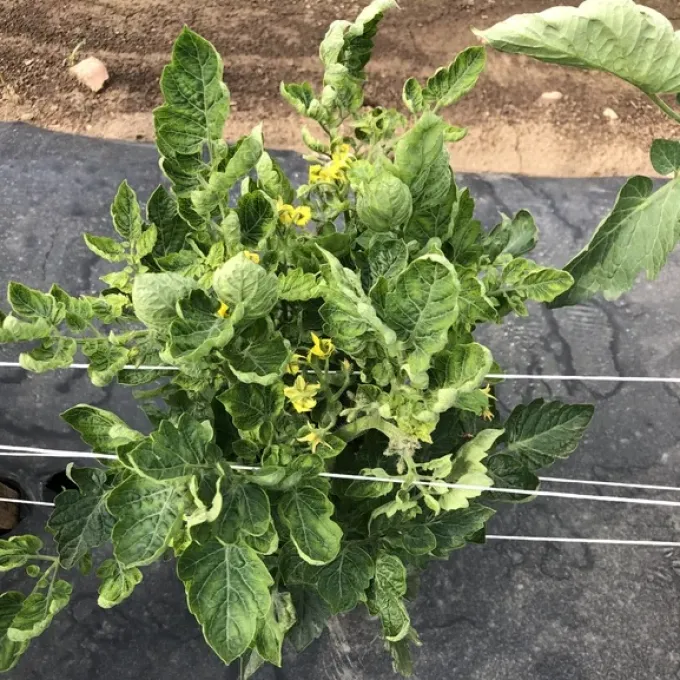
Description
Symptoms
The most distinctive symptom is the upward curling of the leaves, accompanied by thickening and a leathery texture. Leaves often exhibit chlorosis, appearing pale or yellowish compared to healthy foliage.
Affected plants demonstrate severe stunting, characterized by shortened internodes. This gives the plant a compressed or bushy appearance, and in severe cases, the apical meristem stops growing altogether.
Fruit production is severely compromised. Fruits are typically small, distorted, and lack the nutritional quality and market appeal of healthy produce. Flower abortion is also common during the early stages of infection.
The severity of symptoms often correlates with the age of the plant at the time of infection. Young plants infected early in the cycle show the most drastic physiological impairment and yield loss.
- Upward curling and deformation of leaf blades.
- Stunting and bushy growth habit due to short internodes.
- Chlorosis and necrosis of leaf tissues.
- Significant reduction in fruit size and quality.
Pathogen
The causal agent is the Begomovirus solanumretorridi, a member of the Begomovirus genus within the Geminiviridae family. These viruses are characterized by a single-stranded circular DNA genome.
This is a systemic disease. Once the virus enters the host plant through the feeding of insect vectors, it spreads throughout the phloem, causing significant disruption to the plant's metabolic pathways.
The primary vector responsible for the transmission of this virus is the whitefly, specifically Bemisia tabaci. The virus is acquired by the whitefly during feeding and is then transmitted to healthy plants.
The virus exhibits complex interactions with the vector, allowing it to survive for extended periods within the insect. This biological dependency makes controlling the whitefly population the primary defense strategy.
The virus is known for its high genetic variability, which enables it to evolve and infect various solanaceous crops under diverse environmental conditions, making disease management challenging.
Conditions for development
The spread of the virus is highly dependent on the climate, which dictates the activity and population density of the whitefly vector. Warm temperatures, ideally between 25°C and 30°C, accelerate the life cycle of the vector.
Greenhouse environments provide an ideal setting for rapid virus spread. Stable temperatures and protection from external weather fluctuations allow whitefly populations to build up to destructive levels very quickly.
Weed hosts, particularly those belonging to the Solanaceae family, act as essential reservoirs for the virus. These weeds maintain the virus during periods when no crops are present in the field.
High planting density of susceptible crops in a concentrated area significantly increases the probability of vector movement between plants, leading to rapid disease transmission.
Poor sanitation, such as failing to remove infected plant debris after harvest, allows the virus to persist in the environment and serves as an inoculum source for the following season.
Why it matters
The economic impact of Solanaceous leaf curl virus is profound. It can lead to complete crop failure in highly susceptible varieties, causing substantial losses for commercial farmers.
The cost of cultivation is often wasted as infected plants fail to produce marketable produce. This forces growers to implement drastic measures, including destroying entire sections of crops.
Beyond the quantitative loss, the quality degradation of the fruit renders it unsellable. This impacts the profit margins of farmers and limits the availability of high-quality produce for consumers.
The prevalence of the virus in an agricultural region can limit the choice of varieties that can be grown profitably, often forcing a switch to less desirable or more expensive resistant cultivars.
In addition to yield loss, the constant need for intensive chemical control to manage vectors increases production costs and may lead to environmental and public health concerns.
Protection
The most effective strategy is integrated pest management (IPM) focusing on whitefly control. Using systemic insecticides and alternating chemical classes helps prevent the development of vector resistance.
Rigorous sanitation measures are critical. This includes removing all weed hosts from the greenhouse and field margins and destroying infected plants promptly upon detection of symptoms.
The deployment of virus-resistant or tolerant cultivars is the foundation of long-term sustainable management. Selecting certified disease-free seeds and transplants is essential for prevention.
Using physical barriers, such as fine-mesh insect-proof screens on greenhouse vents, effectively prevents whiteflies from entering and colonizing the crop during its vulnerable stages.
Regular scouting and monitoring programs are vital to identify early signs of infection. Rapid removal of the first symptomatic plants can significantly slow the spread and protect the rest of the crop.
Discussion
No discussions yet — be the first.