
Solanaceous leaf curl virus
Begomovirus solanummalaysiaense
The causative agent of the disease is the Begomovirus solanummalaysiaense, which belongs to the genus Begomovirus within the Geminiviridae family. It is a virus characterized by a single-stranded circular DNA genome.
What the section contains
Solanaceous leaf curl virus
The virus is primarily transmitted by the silverleaf whitefly (Bemisia tabaci). The vector acquires the virus through feeding on infected plants and maintains the ability to transmit it throughout its entire lifespan.
Once inside the host, the virus localizes in the phloem tissues, significantly disrupting the translocation of essential nutrients and photosynthates throughout the plant.
Begomoviruses are known for their high genetic diversity due to recombination, which poses a constant challenge for breeding programs aimed at developing resistant crop cultivars.
The stability of viral particles allows them to persist in the environment, particularly within perennial host plants, which serve as reservoirs for future outbreaks.
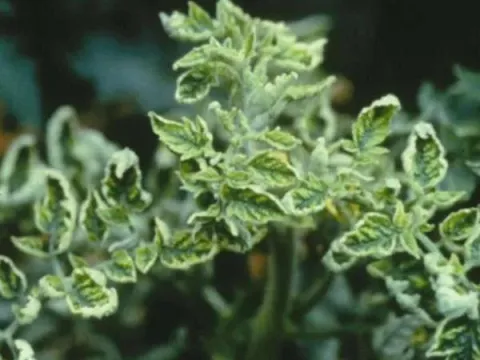
The hallmark symptoms include severe leaf curling, upward cupping of leaf margins, and distinct deformation of younger leaves. Affected tissues often exhibit chlorosis or yellowing patterns.
Infected plants display significant growth retardation, stunted internodes, and a bushy appearance. Severe cases may result in the necrosis of the apical growing points.
Flowering is usually inhibited or aborted. Any fruit that manages to set is typically stunted, misshapen, and commercially valueless, leading to total yield loss on infected plants.
Leaf texture becomes leathery and brittle due to structural changes in the leaf cells. These physical symptoms are often visible long before the full collapse of the plant.
While visual symptoms are diagnostic, they can mimic nutrient deficiencies. Confirmation through PCR or ELISA laboratory testing is essential for accurate identification of the virus.
Disease prevalence is heavily dependent on the population density of the whitefly vector. Outbreaks are most frequent during hot, dry weather conditions that favor rapid insect reproduction.
In greenhouse environments, the virus can spread year-round if proper climate control and pest exclusion methods are not strictly enforced, creating a high-pressure disease environment.
Solanaceous weeds, including wild nightshade and related species, act as primary reservoirs for the virus, allowing it to survive during periods when primary crops are not present.
Agricultural practices such as improper crop rotation and high-density planting contribute to the swift spread of the virus by creating a continuous bridge for vector movement.
Migration of infected whitefly populations from nearby infested fields is the most common cause of sudden epidemics in previously healthy crop areas.
The economic impact is devastating as the virus renders infected plants incapable of producing marketable fruit. This results in direct loss of revenue for agricultural enterprises.
The virus significantly suppresses the metabolic processes of the host plant, weakening its natural resistance to secondary infections such as bacterial spot or late blight.
Management costs skyrocket due to the need for intensive insecticide applications and the requirement for early rogueing (removal) of infected plants to protect healthy ones.
Greenhouse operations are particularly vulnerable, where a single introduction of the virus can result in the loss of entire production cycles and significant financial setbacks.
Furthermore, the degradation of product quality impacts supply chains, as deformed produce fails to meet the strict aesthetic standards required by modern retail markets.
Effective management requires a comprehensive Integrated Pest Management (IPM) strategy focused on controlling whitefly populations through systemic insecticides and mechanical traps.
Sanitation is critical. Removing weeds and cleaning debris around fields and greenhouses reduces the number of initial viral reservoirs available for the insect vectors.
Utilizing resistant or tolerant crop varieties is currently the most sustainable approach to mitigating the threat of Solanaceous leaf curl virus in high-risk zones.
Spatial isolation between nurseries and open-field plantings is recommended to prevent the early introduction of the virus into young, susceptible transplants.
- Implement strict quarantine procedures for incoming plant material.
- Use fine-mesh insect screens on greenhouse vents to physically exclude whiteflies.
- Monitor populations using yellow sticky cards for early detection of vector influx.
- Rogue and dispose of infected plants immediately to lower the local inoculum pressure.