
Tombusviridae
Tombusviridae
The Tombusviridae family consists of a group of plant-pathogenic viruses with single-stranded RNA and icosahedral virions. These viruses are noted for their high stability in the environment, allowing them to persist in soil or plant debris for extended periods.
What the section contains
Tombusviridae
Unlike many other plant viruses, members of this family do not rely on specific insect vectors. Transmission occurs primarily through mechanical injury, contact between healthy and infected plants, or through contaminated soil and water sources.
The disease caused by these viruses is typically systemic, meaning the pathogen infects the vascular system and spreads throughout the entire plant, disrupting normal metabolic and physiological processes.
Accurate identification within the family usually requires laboratory analysis, such as ELISA or PCR, as visual symptoms can often be confused with other disorders or environmental stress factors.
The host range for Tombusviridae is broad, including vegetables such as tomatoes and peppers, fruit trees, berry bushes, and various ornamental species.
Typical symptoms of infection include leaf deformation, characterized by curling, wrinkling, and a significant reduction in leaf size.
Chlorotic spots, mosaic patterns, or necrotic lesions on leaves and stems are common markers. In severe cases, the growing points may die, leading to stunted overall development.
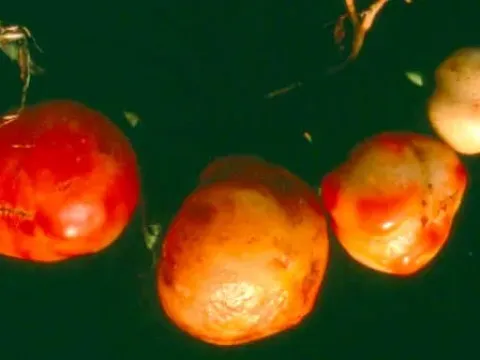
Fruit quality is often severely impacted; fruits become deformed, develop spots or necrotic rings, and often lose their commercial value for market sale or industrial processing.
Plants infected with tombusviruses frequently exhibit a dwarfed appearance due to shortened internodes, making them significantly weaker than healthy counterparts.
- Necrotic rings on leaves and fruit.
- Yellowing or veinal chlorosis.
- Leaf edge curling or upward/downward cupping.
High humidity is the primary environmental factor favoring virus development, as it facilitates transmission through soil and irrigation water.
Optimal temperatures for viral replication typically range between 20°C and 28°C, which coincides with the peak growing season for many agricultural crops.
High planting density promotes rapid viral spread during routine maintenance, as the physical proximity of plants increases the likelihood of mechanical transmission via hands or tools.
Weed populations often serve as hidden reservoirs, allowing the virus to persist in the ecosystem during the off-season and reappear in subsequent plantings.
Contaminated pruning tools and agricultural equipment are frequent vectors for spreading the virus throughout a field or greenhouse facility if not properly sanitized.
The economic harm caused by Tombusviridae is substantial, resulting in reduced yields, poor fruit quality, and increased management costs for farmers.
Systemic infection hinders photosynthesis, which weakens the plant's overall immune system and makes it more susceptible to secondary fungal or bacterial pathogens.
Fields infested with these viruses may remain unsuitable for susceptible crops for several years due to the persistent nature of the virus in the soil.
In greenhouse settings, these viruses can devastate entire crops by spreading rapidly through shared irrigation systems or frequent human contact with plants.
The lack of curative chemical treatments makes these viruses a major threat that necessitates strict, ongoing preventative measures.
The primary control strategy involves strict prevention: using only certified, virus-free planting materials and selecting resistant or tolerant cultivars.
Good phytosanitary practices are essential, including the immediate removal and destruction of infected plants, as well as regular sterilization of all tools and equipment.
Implementing crop rotation is critical to reduce the viral load in the soil, alongside the active management of weed hosts in and around the growing area.
Regular sanitation of irrigation systems and checking the source and quality of water are vital for preventing outbreaks in controlled environments.
If an infection site is identified, isolating the area and limiting movement between infected and healthy zones is necessary to prevent the further spread of the disease.