
Tombusvirus
Tombusvirus
Tombusvirus is a genus of plant pathogenic viruses belonging to the Tombusviridae family, characterized by a single-stranded RNA genome.
What the section contains
Tombusvirus
These viruses possess small, non-enveloped, isometric particles approximately 28–30 nanometers in diameter, which contribute to their high environmental stability.
Unlike many other viruses, tombusviruses are highly persistent, allowing them to remain infectious in soil and crop debris for extended periods.
Transmission occurs primarily through mechanical means, often during standard agricultural practices like pruning, harvesting, or through root-to-root contact in infested soil.
The biological characteristics of the pathogen make it particularly challenging to manage in both greenhouse and field environments.
Symptoms of Tombusvirus infection often begin with mild chlorosis, spotting, or mottling on the foliage of the host plants.
As the disease progresses, leaves may show significant deformation, including crinkling, curling, or overall stunting of the plant.
The infected plants usually exhibit reduced vigor, which is reflected in stunted growth and a general decrease in biomass production.
Necrotic lesions may appear on leaves or stems in advanced stages, potentially leading to the death of affected plant tissues or entire plants.
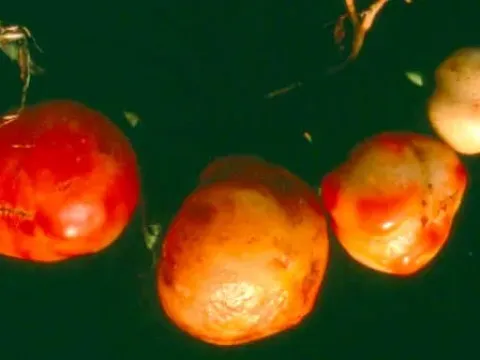
Fruit quality is often severely impacted, characterized by discoloration, surface pitting, or irregular shape, rendering the produce unmarketable.
The development and spread of the virus are favored by high soil moisture levels, which facilitate the movement of viral particles to the root zone.
Environmental conditions that support the rapid multiplication of the host plant also contribute to the systemic spread of the virus within tissues.
Weeds often act as asymptomatic reservoirs, allowing the virus to persist in the field even after the main crop has been harvested.
Poor sanitation practices in greenhouse facilities, such as sharing tools without proper disinfection, significantly accelerate disease transmission.
Continuous cropping of susceptible plant species on the same ground increases the inoculum pressure in the soil over time.
The primary harm caused by Tombusvirus is a significant reduction in total yield due to the systemic disruption of physiological plant processes.
Infected crops show impaired reproductive development, leading to lower fruit yields and poor quality, which causes economic loss for producers.
Massive outbreaks in commercial operations can result in the loss of entire crop cycles and the need for expensive soil sterilization.
The wide host range of some tombusviruses poses a constant risk to diversified vegetable farms, making integrated pest management essential.
Long-term economic impacts include increased production costs due to the need for rigorous disease monitoring and strict sanitary procedures.
The most effective strategy for managing tombusviruses is the use of high-quality, virus-free planting material, often derived from meristem culture.
Strict sanitation protocols must be enforced, including the regular disinfection of hands, tools, and machinery to prevent mechanical transmission.
Selecting and planting resistant or tolerant cultivars is a sustainable way to minimize the impact of the virus in areas with a history of infestation.
Early identification and roguing of symptomatic plants, combined with effective weed management, help to suppress the spread of the pathogen.
In protected cultivation, soil steam sterilization or switching to soilless hydroponic systems can effectively eliminate the viral reservoir.