
Tomato yellow leaf curl virus
Begomovirus bemisiaseptimi
The causal agent is the Tomato yellow leaf curl virus (TYLCV), a member of the Begomovirus genus within the Geminiviridae family.
What the section contains
Tomato yellow leaf curl virus
This is a single-stranded DNA virus that primarily affects solanaceous crops including tomatoes, peppers, and beans.
The virus is exclusively transmitted by the whitefly species Bemisia tabaci (tobacco or silverleaf whitefly).
Once the whitefly acquires the virus by feeding on an infected plant, it remains infectious for the rest of its life.
Transmission is persistent and circulative, meaning the virus must pass through the insect's body before being injected into a new plant.
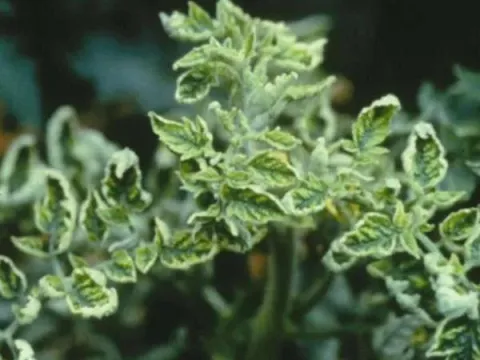
Symptoms typically start with upward curling and yellowing of the leaf margins on young apical leaves.
Leaves become significantly reduced in size, leathery in texture, and display a crumpled appearance.
Severely infected plants exhibit stunted growth, shortened internodes, and a bushy, rosette-like habit.
Flower initiation is often suppressed, leading to flower abscission and total fruit set failure.
If fruit does manage to develop on affected plants, it is usually small, pale, and economically non-viable.
Disease development is tightly correlated with the population density of the Bemisia tabaci vector.
Warmer temperatures significantly increase the rate of whitefly reproduction and the efficiency of viral transmission.
Greenhouse environments provide ideal conditions for year-round viral circulation if strict management is absent.
Weeds around the field often act as virus reservoirs, allowing the pathogen to survive during the winter months.
Wind-blown migrations of whiteflies from neighboring fields often lead to rapid and widespread infection of healthy crops.
TYLCV is considered one of the most economically devastating viruses affecting tomato production worldwide.
Early infections during the seedling stage can lead to a 100% loss of commercial yield.
It creates significant challenges for commercial growers by increasing production costs due to intensive pest management.
The virus impacts global trade, as quarantine measures are often required to prevent the introduction of both the virus and its vector.
The inability to grow susceptible varieties in endemic regions necessitates a transition toward resistant breeding programs.
The primary strategy for controlling TYLCV is the integrated management of the whitefly population.
Planting resistant or tolerant tomato hybrids is the most sustainable and effective way to mitigate disease losses.
Regular applications of systemic and contact insecticides are essential to suppress whitefly numbers below the economic threshold.
Implementation of physical barriers like fine-mesh screens can effectively exclude whiteflies from greenhouse structures.
- Rigorous weed control around production sites
- Use of yellow sticky traps for monitoring and early detection
- Starting with virus-free certified transplants
- Prompt rogueing and destruction of symptomatic plants to reduce inoculum pressure