
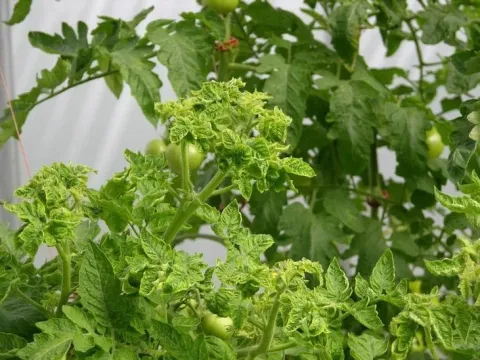
Tomato yellow leaf curl virus
Begomovirus bemisiasecundi
The disease is caused by the Tomato yellow leaf curl virus (TYLCV), a member of the Begomovirus genus within the Geminiviridae family.
What the section contains
Tomato yellow leaf curl virus
The pathogen is characterized by a single-stranded circular DNA genome, enclosed within a unique twinned capsid structure, typical of this viral group.
The primary vector responsible for the transmission of this virus is the silverleaf whitefly (Bemisia tabaci), which acquires the virus during phloem feeding.
After ingestion, the virus circulates within the whitefly and is injected into the vascular tissue of healthy tomato plants during subsequent feeding sessions.
Transmission occurs exclusively through the vector; there is no evidence of seed-borne or mechanical transmission under standard field conditions.
Initial symptoms include the clearing of small veins at the base of young leaves, followed by a noticeable chlorotic yellowing of the leaf margins.
Leaves display severe upward curling (cupping) and a significant reduction in size, often resulting in a crinkled or scorched appearance.
Infected plants exhibit severe stunting and reduced internode length, giving the entire plant a bushy, dwarf-like habitus that prevents normal growth.
Flower abscission is a common occurrence, and if fruit set does occur, the resulting tomatoes are usually small, malformed, and lack marketable quality.
The combination of these symptoms results in a complete failure of the plant to produce a viable commercial crop if infection occurs early in the season.
The epidemiology of TYLCV is heavily dictated by the population dynamics of Bemisia tabaci, which thrives in warm and hot climatic conditions.
High temperatures accelerate the life cycle of the whitefly, leading to rapid population explosions that increase the viral inoculation pressure.
Greenhouse environments provide an ideal refuge for both the virus and the whitefly, especially in regions with mild winters or continuous cropping cycles.
The migration of wind-borne whitefly populations allows the virus to traverse large distances, facilitating outbreaks across diverse geographical regions.
The presence of wild reservoirs, including various solanaceous weeds, ensures the persistence of the virus in the environment between planting seasons.
TYLCV is globally recognized as one of the most economically damaging viruses affecting protected and open-field tomato production.
Infection results in catastrophic yield losses, often rendering entire plots unproductive due to the systemic nature of the viral suppression of fruit development.
The disruption of normal photosynthetic activity and nutrient transport within the host plant leads to total crop failure and significant financial losses for producers.
Because the disease can remain latent for some time, it often goes undetected, causing widespread damage before farmers can implement effective measures.
Total economic impact includes not only lost yield but also the high costs associated with intensive insecticide programs used to manage the vector population.
The most successful strategy for managing TYLCV is the utilization of resistant tomato cultivars, which are now available for many commercial production areas.
Integrated Pest Management (IPM) is essential, combining careful monitoring of whitefly levels with the judicious use of selective insecticides.
Cultural practices, such as maintaining weed-free buffers and removing crop debris immediately after harvest, significantly reduce the local viral reservoir.
- Installing high-density insect-proof screens on greenhouse vents.
- Releasing biological control agents like parasitic wasps or predators to suppress whitefly numbers.
- Implementing strict sanitation protocols to eliminate whitefly breeding grounds.
- Using reflective mulches to deter the landing of whitefly vectors on young plants.