
Squash leaf curl begomovirus
Begomovirus cucurbitatenuis
Description
Symptoms
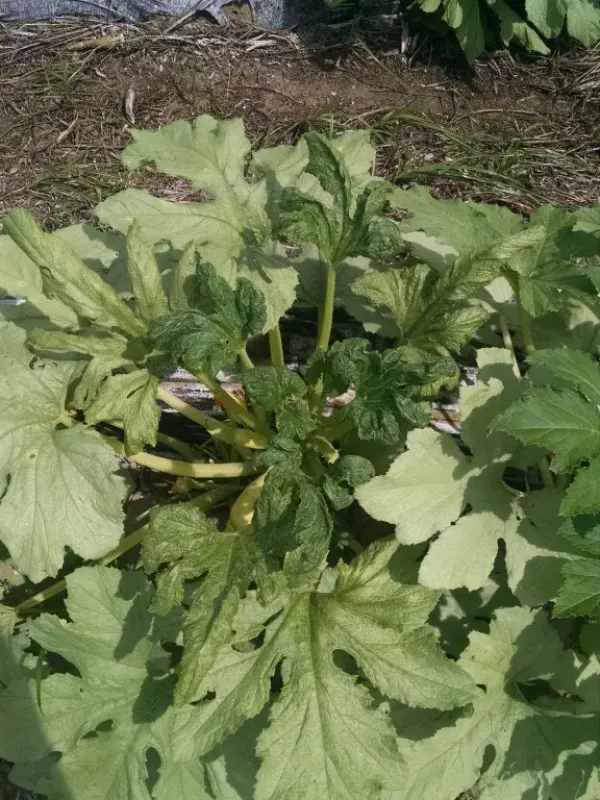
Symptoms of Squash leaf curl begomovirus infection typically manifest as severe leaf curling, thickening, and prominent vein swelling, which distorts the plant architecture.
Infected plants show characteristic mosaic patterns, including chlorotic yellowing, mottling, and an overall stunted, bushy appearance due to shortened internodes.
The virus severely inhibits vegetative growth, preventing the plant from reaching its full size and causing a significant reduction in the photosynthetic capacity of leaves.
Flowering and fruit set are drastically reduced or entirely suppressed, as the plant directs energy away from reproductive processes to cope with the systemic infection.
Any fruit that manages to develop is often deformed, discolored, and unmarketable, leading to complete crop failure in heavily infested areas.
Pathogen
The disease is caused by a virus belonging to the genus Begomovirus within the Geminiviridae family, which contains a circular single-stranded DNA genome.
The primary vector for this pathogen is the whitefly (Bemisia tabaci), which acquires the virus through feeding on the phloem of infected host plants.
Once acquired, the virus remains in the whitefly's body, and the insect can transmit it to healthy cucurbit plants during subsequent feeding sessions.
The viral particles replicate and accumulate in the plant's phloem tissues, causing a systemic infection that spreads throughout the entire plant system.
Molecular detection techniques, such as polymerase chain reaction (PCR), are essential for laboratory confirmation of the virus in plant tissues.
Conditions for development
The prevalence and spread of this begomovirus are highly dependent on the population dynamics of the whitefly vector, which thrives in warm and dry climates.
Rapid outbreaks are frequently observed during periods of high temperature and low humidity, conditions that favor both whitefly reproduction and migration.
Weed species act as critical reservoirs for the virus, allowing it to persist in the field environment during the off-season and providing a bridge to new crops.
In greenhouse settings, the virus spreads rapidly because the controlled climate supports a stable and growing population of whiteflies throughout the year.
Poor agricultural practices, such as failing to manage weeds or neglecting early detection of insect populations, exacerbate the spread of the virus across the field.
Why it matters
The economic impact of Squash leaf curl begomovirus is severe, as it can cause total yield loss, rendering the harvested product unsuitable for the market.
Infections occurring early in the growing season are particularly devastating, often leading to total crop failure and the necessity of immediate field abandonment.
By compromising the plant's physiological integrity, the virus makes crops more susceptible to secondary infestations of other pests and various fungal pathogens.
Large-scale outbreaks cause substantial financial losses for producers, specifically impacting the cultivation of commercial squash, pumpkins, and other cucurbits.
The lack of curative treatments for infected plants highlights the importance of prevention and the strict management of vector populations to maintain productivity.
Protection
Effective management requires a comprehensive integrated pest management (IPM) strategy focused on controlling the whitefly population through chemical and biological means.
Sanitation practices are vital, including the immediate removal and destruction of symptomatic plants to eliminate the source of the virus for other healthy plants.
Preventive measures include the use of virus-free planting stock and the implementation of sufficient spatial separation between new and potentially infected fields.
Yellow sticky traps and reflective mulches are recommended in greenhouses to monitor and reduce whitefly migration and settle-down on host plants.
Maintaining a clean field environment by removing weeds and volunteer plants is necessary to reduce the overall viral reservoir in the production area.
Discussion
No discussions yet — be the first.