
Squash leaf curl virus
Begomovirus cucurbitapeponis
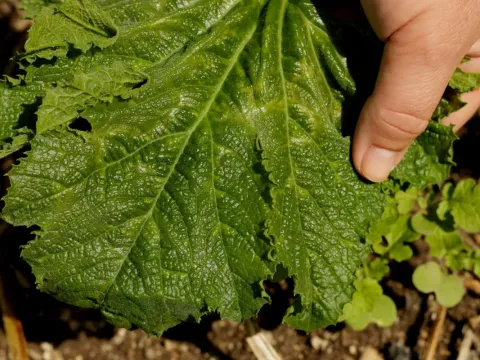
The primary symptom of this infection is the severe curling and crinkling of leaves, often accompanied by the thickening of leaf tissues and downward curving of leaf margins.
What the section contains
Squash leaf curl virus
Initial infection often manifests as mild interveinal yellowing or mosaic patterns on the foliage, which progress into stunted growth and bushy appearance of the entire plant.
Flowers on infected plants exhibit significant deformities and often fall prematurely, leading to a drastic reduction in fruit set and total crop yield.
Any fruits that do develop are frequently distorted, mottled, or have bumpy, uneven skin, which makes them entirely unsuitable for market sales.
Symptoms usually appear in clusters within the field, indicating an active spread from a primary infection source through the movement of insect vectors.
The pathogen is a member of the Begomovirus genus within the Geminiviridae family, characterized by its unique twinned, or geminate, viral particle morphology.
It is an obligate parasite that requires a living host to survive and is transmitted primarily by the whitefly complex, specifically Bemisia tabaci.
The virus has a wide host range, infecting various economically important crops in the Cucurbitaceae family, including pumpkins, squashes, cucumbers, and melons.
Once inside the plant, the virus moves systemically through the phloem, interfering with the transport of essential nutrients and disrupting normal plant physiological processes.
Genetic variability within the virus population can lead to the emergence of new, more virulent strains that pose a persistent threat to resistant crop varieties.
Transmission occurs exclusively via whiteflies, which acquire the virus by feeding on infected phloem sap and then transmit it to healthy plants during subsequent feeding sessions.
Warm, dry weather conditions are highly conducive to the rapid increase of whitefly populations, thereby accelerating the spread of the virus throughout the field.
Greenhouse environments often provide the perfect microclimate for sustained whitefly reproduction, leading to high disease pressure and severe outbreaks in sheltered crops.
Nearby weed populations or adjacent infected crops serve as critical reservoirs for the virus, allowing it to persist and spread to new plantings when conditions are favorable.
Dense planting patterns and poor canopy aeration increase the efficiency of vector movement, making it easier for the virus to jump from plant to plant.
The economic impact of this virus is severe, as it causes massive losses in marketable yield by preventing normal fruit production and ruining the quality of developed fruits.
Infected crops lose their vigor, making them more susceptible to secondary pathogens and reducing the overall efficiency of resource use in agricultural systems.
The aesthetic degradation of the produce, combined with reduced shelf life, makes it impossible for growers to meet quality standards for fresh market distribution.
High costs associated with intensive insecticide programs to manage whitefly populations significantly reduce the profitability of cucurbit cultivation.
Long-term infestation can lead to the abandonment of certain production areas if the virus becomes endemic and cannot be controlled through standard agricultural practices.
The most effective strategy involves an integrated approach focused on controlling the whitefly vector using appropriate insecticides and biological control agents.
Maintaining strict weed control around the perimeter of the field is essential to eliminate virus reservoirs and reduce the breeding grounds for whiteflies.
In greenhouses, the installation of high-quality insect-proof netting on all vents and doors serves as a mechanical barrier to prevent whitefly ingress.
Early detection and rogueing—the immediate removal and destruction of infected plants—is critical to break the transmission cycle and limit spread within the crop.
Adopting sustainable crop rotation practices and ensuring temporal separation between planting cycles helps to reduce the build-up of viral inoculum in the soil.