
Potato common scab
Potato scab
The disease is caused by actinomycetes, primarily the species Streptomyces scabies. These microorganisms occupy an ecological niche between bacteria and true fungi.
What the section contains
Potato common scab
They survive for long periods in the soil as saprophytes, consuming organic matter. Infection typically occurs when the pathogen enters through the lenticels of young developing tubers.
These organisms are highly resilient to harsh environmental conditions, making them persistent residents of agricultural soils. They do not require a host plant to persist in the field environment.
Spread of the pathogen is primarily driven by planting infected seed potatoes or moving infested soil via farm machinery and equipment between fields.
The biology of the pathogen is intricately linked to soil pH and moisture levels, which dictates its ability to colonize potato tubers effectively.
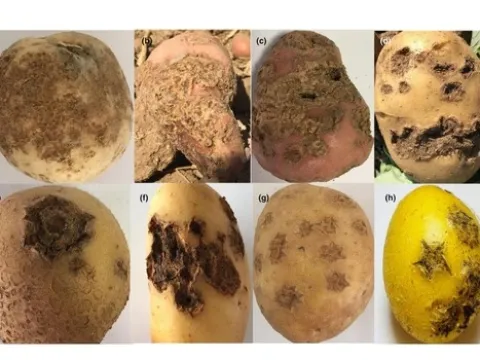
Initial symptoms appear as small, brownish spots on the surface of young tubers. Over time, these spots expand and develop into distinct, rough lesions.
Common scab lesions can vary in appearance, ranging from superficial, corky pockmarks to deep, pitted, or raised crust-like scabs, depending on the potato variety.
The skin in the affected areas loses its integrity, becoming rough and cracked. In severe cases, multiple lesions merge to cover the entire surface of the potato.
The infection may penetrate deeper than the skin, reaching into the tuber tissue. Below the lesion, the flesh often becomes firm, dark, and desiccated.
During humid conditions at harvest, a thin, fuzzy layer of spores may be visible on the surface of the lesions, indicating active pathogen reproduction.
Potato common scab thrives in soils with a neutral or alkaline pH (7.0 and above). Excessive liming of fields often creates favorable conditions for the disease.
The optimal temperature range for the pathogen's growth is between 20°C and 25°C. This period often coincides with the critical phase of tuber initiation and development.
Soil moisture deficiency is a primary trigger for the disease. Dry soil conditions inhibit the natural defenses of the tubers, making them highly susceptible to Streptomyces invasion.
Application of fresh manure is strongly discouraged as it significantly increases the pathogen population and may alter soil pH levels in the root zone.
Short crop rotations or monocropping practices facilitate the accumulation of the pathogen in the soil, leading to a high infection pressure over time.
The primary damage caused by common scab is a significant reduction in the aesthetic and market value of the potato harvest, rendering it unfit for fresh market sale.
Infected tubers are highly susceptible to secondary infections by soft rot bacteria and fungi during storage, leading to substantial losses in warehouses.
The disease degrades the nutritional quality of the potato, often reducing starch content and overall consumer appeal due to the rough, unattractive skin.
Using scab-infected tubers as seed potatoes spreads the pathogen to new planting areas and may decrease the overall germination rate and plant vigor.
In severe infestation years, growers can experience yield reductions of up to 30%, which represents a major economic loss for the farming operation.
Integrated disease management focuses on rotating potatoes with non-host crops and using cover crops like rye or mustards to improve overall soil health.
Avoid applying fresh manure shortly before planting. Utilize well-composted organic matter and physiologically acidic fertilizers to manage the soil environment.
Maintaining consistent soil moisture during the tuberization stage is crucial for preventing infection. Irrigation acts as an effective preventive barrier.
Selecting resistant potato varieties is the most effective long-term strategy for managing common scab, especially in high-risk environments.
- Apply sulfur or acidic fertilizers to lower soil pH in susceptible areas.
- Treat seed potatoes with appropriate fungicides before planting.
- Practice thorough cleaning of equipment to avoid cross-field contamination.
- Remove and destroy all infected plant debris to minimize the soil inoculum level.