
Potato yellow
Potato yellow
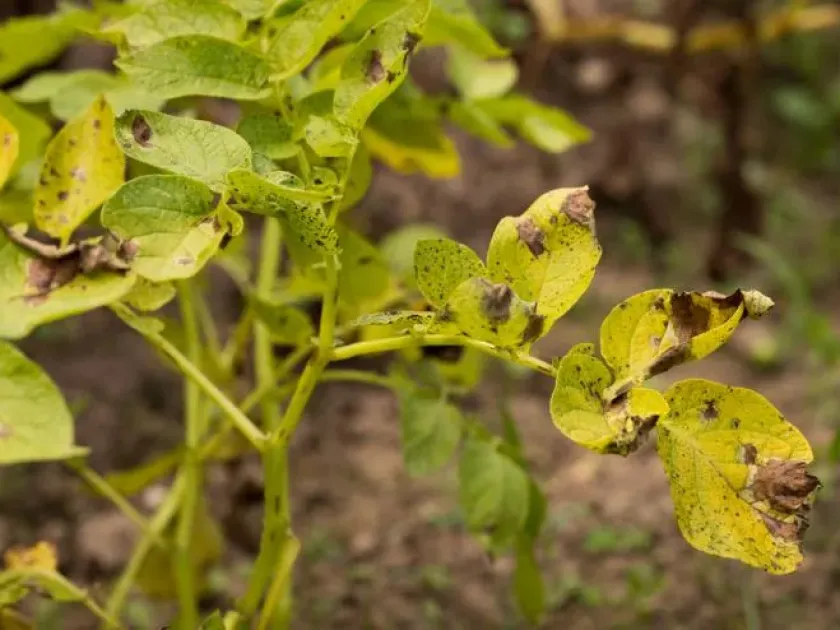
Description
Symptoms
The primary symptom is chlorosis, where leaf tissue turns yellow, starting from either the lower canopy or the young apical shoots of the plant.
Unlike natural senescence, this yellowing is often accompanied by leaf curling, deformation, or the development of irregular necrotic patches across the foliage.
Plants display stunted growth, characterized by shortened internodes and thinner stems compared to healthy, vigorous plants in the same field.
Root systems may appear weakened or underdeveloped, which directly results in the formation of undersized or malformed tubers with poor skin quality.
Diagnostic observation often reveals vascular browning in the stem or tuber cross-section, indicating a systemic disruption in nutrient transport channels.
Pathogen
The disease is typically caused by luteoviruses or phytoplasmas that colonize the phloem tissues, effectively blocking the transport of essential carbohydrates.
Transmission occurs predominantly through insect vectors, including aphids, leafhoppers, and other sap-sucking insects that facilitate the spread of the virus.
Contaminated seed tubers serve as a major reservoir for the pathogen, allowing the disease to persist and spread in subsequent planting seasons.
Mechanical transmission via contaminated farm equipment during pruning or cultivation practices is another possible, though less common, route of infection.
Once inside the plant, the pathogen multiplies rapidly, exhausting the host's energy reserves and disrupting vital physiological processes like photosynthesis.
Conditions for development
Disease outbreaks are highly correlated with high temperatures and dry spells, which favor the proliferation and movement of insect vectors.
Failure to implement crop rotation leads to the accumulation of pathogen reservoirs in the soil and surrounding environment, increasing field pressure.
The presence of weeds in or near potato fields acts as a host for both the vectors and the virus itself during the off-season, enabling early infection.
Overcrowded planting patterns impede airflow and create microclimates that protect pests while facilitating their migration between neighboring potato plants.
Nutritional deficiencies or insufficient irrigation weaken the plant’s systemic resistance, making it significantly more susceptible to viral invasion.
Why it matters
The disease causes a drastic reduction in total yield because the blockage of phloem prevents the translocation of sugars necessary for tuber development.
Infected tubers are unsuitable for future planting, leading to a significant loss of capital and increased costs for sourcing healthy seed stocks.
Premature leaf senescence limits the duration of the growing season, resulting in lower starch accumulation and reduced nutritional quality of the tubers.
Producers face rising operational costs associated with intensive insecticidal programs and the labor-intensive removal of symptomatic plants.
In severe cases, yield losses can range from 30% to over 80%, depending on the potato variety, weather conditions, and the timing of the initial infection.
Protection
The cornerstone of management is the use of high-quality, certified, and disease-free seed tubers obtained from reliable suppliers.
Implementing a rigorous insect control program using systemic insecticides helps manage the populations of aphids and leafhoppers throughout the season.
Spatial isolation between potato crops and other Solanaceous plants is crucial to prevent cross-contamination and the spread of vector-borne viruses.
Sanitation practices, such as weed removal and the cleaning of agricultural machinery, significantly reduce the sources of inoculum within the field.
Proactive phytosanitary roguing, which involves the immediate removal and destruction of infected plants, is essential to minimize secondary spread.
Discussion
No discussions yet — be the first.