
Potato fusarium dry rot
Gibberella cyanogena
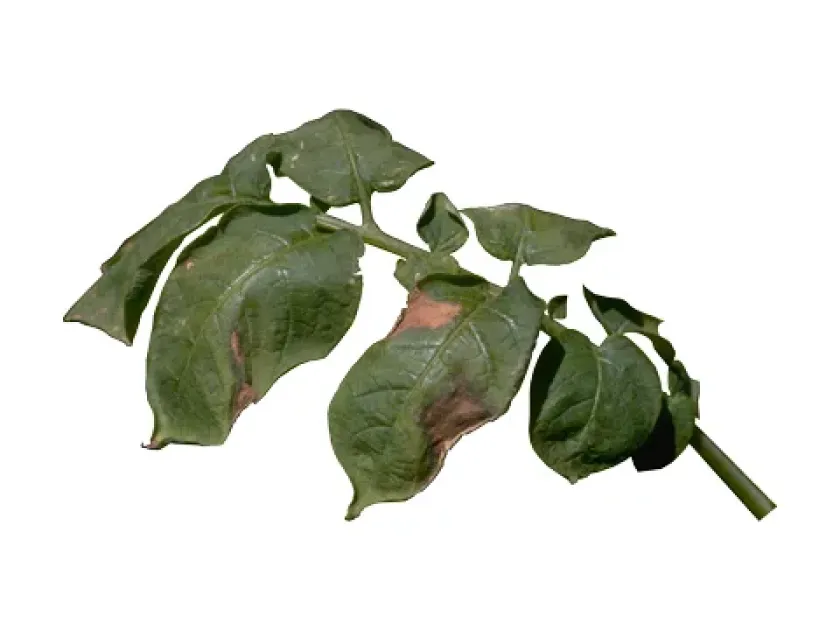
Description
Symptoms
The first symptoms of fusarium wilt typically appear during the flowering stage. Affected plants show chlorosis (yellowing) of the upper leaves, followed by leaf rolling and eventual wilting that does not recover even during the night.
A cross-section of the lower stem reveals a dark brown or black discoloration of the vascular ring. This necrosis is a definitive sign of the fungus obstructing the plant's internal circulatory system.
On tubers, the disease manifests as dry rot. Small, slightly depressed spots appear on the surface, which expand into larger, sunken, wrinkled areas of necrotic tissue as the internal flesh decays.
The infected tissue becomes brown and friable. Often, cavities form inside the tuber, which are lined with white, pink, or bluish fungal mycelium, indicating the presence of heavy sporulation.
- Yellowing and wilting of the plant canopy.
- Browning of the vascular tissue in stems.
- Sunken, wrinkled patches on tuber skin.
- Internal tissue decay and cavitation.
- Visible fungal growth (mycelium) on infected parts.
Pathogen
The causal agent of this disease is the fungus Gibberella cyanogena (anamorph Fusarium solani), a soil-borne pathogen. It survives in the soil for several years as mycelium or resistant spores known as chlamydospores, making it difficult to eradicate.
The fungus invades the potato plant primarily through the root system or wounds on the tubers. Once inside, it colonizes the vascular tissues, effectively blocking the transport of water and nutrients throughout the potato plant.
The pathogen secretes enzymes and mycotoxins that break down plant cell walls. This action leads to the characteristic wilting and tissue degradation associated with the disease during the growing season.
Dissemination occurs via infected soil, contaminated seed tubers, and farm equipment. Wind and water can also transport spores across fields, ensuring the persistence of the pathogen in agricultural environments.
Because the fungus is highly adaptable, it can colonize various organic matter in the soil, allowing it to maintain a high population density even in the absence of a primary host plant.
Conditions for development
Development of the disease is highly favored by soil temperatures between 20°C and 27°C. While the fungus can survive in a wide range of climates, these temperatures trigger rapid mycelial growth.
Moisture stress significantly increases susceptibility. Periods of drought followed by excessive irrigation or rainfall can weaken the plant's natural defenses, allowing the fungus to penetrate roots more easily.
Storage conditions are critical for post-harvest disease development. High humidity and poor ventilation in warehouses create an environment where the fungus can rapidly spread from one infected tuber to adjacent healthy ones.
Mechanical damage is the most significant factor for infection. Cuts, bruises, and abrasions received during the harvest or grading process provide direct access for fungal spores to colonize the tuber flesh.
Improper soil pH can also influence the disease. The pathogen often thrives in lighter, sandy soils where the microbial community is less effective at competing with fungal growth.
Why it matters
The primary economic harm is the massive loss of marketable potatoes during storage. Fusarium dry rot can destroy a significant percentage of a crop within weeks if storage conditions are not strictly managed.
During the growth phase, the disease reduces tuber yield by killing plants prematurely. This results in smaller, lower-quality potatoes that do not meet size or weight standards for commercial sale.
The pathogen produces harmful mycotoxins that can contaminate the potato crop. This renders the produce unsafe for both human consumption and livestock feed, leading to total economic loss of the infected batch.
Fields infested with Gibberella cyanogena become unsuitable for potato cultivation for multiple seasons, as the fungus persists in the soil, limiting land-use flexibility for farmers.
Costs related to chemical seed treatments, increased storage monitoring, and the disposal of infected produce significantly increase operational expenses for potato growers worldwide.
Protection
Crop rotation is the most essential management practice. Avoiding the planting of potatoes in the same field for at least 3-4 years helps reduce the inoculum level of the pathogen in the soil.
Using high-quality, certified disease-free seed tubers is crucial. Treating seeds with authorized systemic fungicides before planting provides a necessary protective barrier against early-season infection.
Careful handling during harvest is vital to prevent skin damage. Minimizing mechanical stress reduces the number of entry points available for the fungus, significantly lowering the risk of dry rot in storage.
Proper curing of potatoes after harvest—keeping them at moderate temperatures for a few days—allows the skin to suberize (harden), which acts as a natural defense against invading pathogens.
Regular sanitation of storage facilities is required. Cleaning and disinfecting warehouses before new crops arrive, along with maintaining optimal storage temperatures of 2-4°C, are standard industry practices to curb the disease.
Discussion
No discussions yet — be the first.