
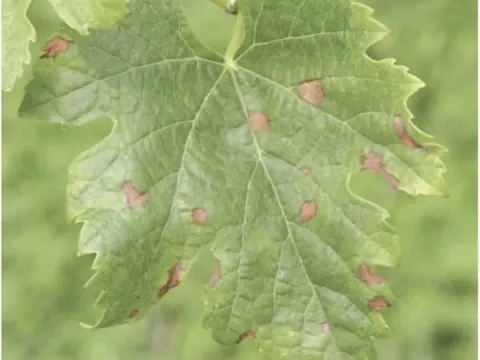
Isariopsis leaf spot
Isariopsis clavispora
The disease is caused by the fungus Isariopsis clavispora, which is classified within the group of imperfect fungi.
What the section contains
Isariopsis leaf spot
This pathogen acts as a parasite that specifically targets the foliage of the grapevine during the active growing season.
The fungus survives the dormant winter period primarily as mycelium within fallen leaves left on the vineyard floor.
It propagates through the production of conidia, which serve as the primary inoculum for spreading the infection to new leaves.
The structural growth of the pathogen involves the formation of conidiophores that erupt through the stomata of the leaf epidermis.
The initial symptoms present as irregular, angular spots on the leaves, which are typically bounded by the leaf veins.
These spots often start as small brown discolourations and eventually turn dark brown or nearly black as the fungus matures.
A characteristic olive-grey or brownish fungal bloom becomes visible on the underside of the leaves at the site of the infection.
As the disease progresses, these lesions may merge, resulting in large necrotic areas that compromise the leaf tissue.
Severe infestations frequently cause the leaves to turn yellow, wither, and drop prematurely, leading to significant defoliation.
High humidity levels and frequent rainfall are the most critical factors driving the spread and germination of the fungus.
Warm temperatures ranging between 20°C and 25°C provide the optimal climate for the rapid proliferation of the disease.
Poor ventilation within the canopy, caused by dense growth or improper pruning, traps moisture and favors the pathogen.
Dew and fog create a thin film of water on leaf surfaces, allowing the spores to easily penetrate the host tissue.
Vineyards with a history of accumulated debris are at a much higher risk of seasonal re-infection by the fungus.
The disease causes significant damage by disrupting the photosynthetic capacity of the grapevine's leaves.
Reduced photosynthesis leads to a decrease in sugar accumulation, negatively affecting both the yield and the quality of the grapes.
Premature leaf fall prevents the vine from properly maturing its wood, which is essential for surviving cold winters.
Stressed vines become more susceptible to other biotic and abiotic threats, weakening the overall plant health.
Chronic annual occurrences of this disease can result in diminished vine vigor and long-term economic losses for the vineyard.
Sanitation is the most effective preventative measure, involving the rigorous removal and burning of all leaf litter in autumn.
Proper canopy management, including summer pruning and leaf thinning, is essential to improve airflow and reduce moisture.
Copper-based fungicides are widely used to create a protective barrier on leaves and inhibit spore germination during the season.
Systemic fungicides may be applied preventatively if the weather conditions are highly conducive to fungal growth.
Maintaining vine health through balanced fertilization ensures the plants are robust enough to withstand minor infections.