
Helgardia
Helgardia
The disease is caused by fungi belonging to the genus Helgardia, specifically Helgardia herpotrichoides, which is the causal agent of eyespot disease, also known as strawbreaker foot rot.
What the section contains
Helgardia
The pathogen is a soil-borne fungus that colonizes the base of cereal stems. Its mycelium is highly resilient, allowing it to survive for extended periods on infected crop residues buried in the soil.
The life cycle involves the production of conidia, which are splashed by rain onto the lower parts of young cereal plants. This infection mechanism is particularly active during cool and damp autumn or spring weather.
The fungus is specialized in infecting winter cereals. Once it penetrates the leaf sheaths, it progresses toward the stem, colonizing the vascular tissues and interfering with nutrient transport.
Due to its high biological flexibility and the ability to persist on crop stubble, the pathogen remains a significant challenge for modern cereal production systems globally.
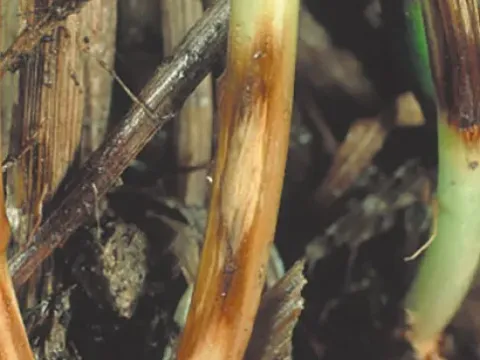
The most diagnostic sign is the presence of elliptical, eye-shaped lesions on the base of the stem. These spots typically feature a light center surrounded by a dark brown necrotic border.
As the infection advances, these lesions may merge, eventually girdling the stem completely. This process softens the stem tissue, significantly reducing its structural integrity.
Affected crops often exhibit premature lodging, where stems collapse in patches throughout the field. This condition is a classic indicator of a severe eyespot infection.
Plants often show symptoms of water stress, with yellowing and dying of lower leaves. In some cases, a greyish mycelial mat may be found inside the hollow stem, indicating advanced fungal colonization.
- Elliptical "eyespot" lesions on the stem base.
- Patchy lodging of the cereal crop.
- Premature yellowing of basal foliage.
- Reduced head development and shriveled grains.
Helgardia thrives in cool, wet weather conditions. Temperatures between +5°C and +15°C are optimal for spore germination and active fungal colonization of host plants.
High humidity within the crop canopy, exacerbated by dense planting, creates a favorable microenvironment for the fungus. Frequent rainfall is necessary for the spread of spores from residues to plants.
Early sowing of winter cereals often exposes young seedlings to higher infection pressure during the critical autumn period. Stubble management plays a crucial role in disease epidemiology.
Reduced tillage practices can increase the risk of disease by keeping infected crop residues near the soil surface. This provides a continuous source of inoculum for subsequent seasons.
Excessive nitrogen application can sometimes render stem tissues more susceptible to fungal entry, as rapid growth produces more succulent and vulnerable cell structures.
The primary economic impact of Helgardia is caused by lodging, which complicates harvesting operations and significantly increases potential grain loss per hectare.
By damaging the vascular tissues, the fungus impairs the transport of water and nutrients to the developing ear. This leads to the formation of shriveled, low-quality grain.
Under favorable conditions for the pathogen, crop yield losses can range from 15% to 30%, or even higher in heavily infested fields with susceptible cultivars.
Weakened stems are more susceptible to additional environmental stresses, such as high winds, which trigger widespread lodging. This renders the crop difficult to combine efficiently.
The financial burden is compounded by the need for repeated fungicide applications to manage the disease, which adds to the total cost of cereal production.
Crop rotation is the most effective cultural practice to manage Helgardia. It is recommended to avoid planting susceptible cereals in the same field for at least 2–3 years.
Thorough incorporation of crop residues into the soil helps accelerate the natural decay of the fungus. Avoiding excessively early planting dates can also reduce initial infection rates.
The selection and use of resistant or tolerant cereal cultivars remain the cornerstone of an integrated pest management strategy against eyespot disease.
Chemical control involving systemic fungicides is necessary when infection levels exceed economic thresholds, particularly during the early spring tillering stage.
Regular field scouting is essential to assess disease prevalence. Growers should integrate variety selection, rotation, and judicious fungicide use to maintain healthy, high-yielding crops.