
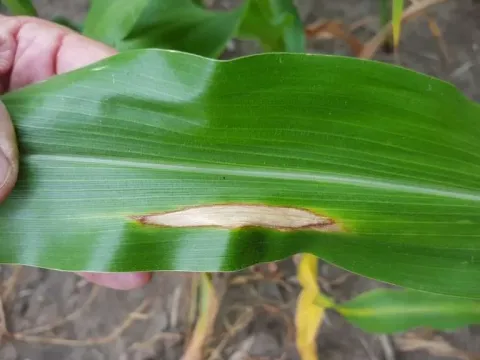
Helminthosporium leaf spot
Drechslera
Helminthosporium leaf spot is a widespread fungal disease complex caused by fungi in the genus Drechslera. These pathogens are classified as mitosporic fungi that primarily attack various cereals and grasses.
What the section contains
Helminthosporium leaf spot
Common species include Drechslera teres, the causal agent of net blotch in barley, and Drechslera sorokiniana, which is responsible for leaf spot and root rot in wheat and other cereals.
The fungus survives as dormant mycelium or spores (conidia) in crop debris, soil, and on the surface of infected seeds, acting as the primary source of inoculation for the next season.
Dissemination occurs through wind-blown conidia and rain splashing, facilitating rapid secondary spread throughout the field during periods of high humidity and moderate temperatures.
The biology of Drechslera is characterized by the production of toxins that damage plant cells, facilitating tissue colonization and the development of necrotic lesions on the host plant.
Symptoms of Helminthosporium leaf spot are observed on roots, stems, leaves, and heads of cereal plants. The most common indication is the appearance of dark, necrotized spots.
On leaf blades, the disease typically manifests as elongated, dark brown spots often surrounded by a chlorotic halo. In net blotch, these lesions form a characteristic net-like pattern of streaks.
Root system infection leads to browning, decay, and stunted development, which often results in premature plant lodging and reduced biomass accumulation.
When the pathogen affects the heads, it creates a characteristic black mold or dark discoloration on the grains, negatively impacting seed quality and grain weight.
- Necrotic, dark brown spots on foliage.
- Stunting and discoloration of roots.
- Premature yellowing and death of the lower leaves.
- Dark mold visible on grain surfaces under wet conditions.
- Reduced seedling emergence due to seed-borne infection.
Favorable conditions for the development of Drechslera include moderate temperatures ranging from 15°C to 25°C and high humidity, which is essential for sporulation.
Prolonged rainfall, heavy morning dews, and high air moisture during the critical growth stages (tillering to heading) significantly accelerate the spread of the fungal disease.
Poor crop rotation practices, specifically monocropping or short-rotation cycles with susceptible cereal hosts, lead to a high accumulation of pathogen inoculum in the field.
Imbalanced soil nutrition, particularly high nitrogen levels with potassium or phosphorus deficiencies, often exacerbates the severity of the infection by weakening host defenses.
Plant stress factors such as drought, frost, or physical damage facilitate easier entry for the fungus into plant tissues, leading to more aggressive disease progression.
The economic impact of Helminthosporium leaf spot is substantial, primarily due to the reduction of photosynthetic leaf area, which limits the plant's ability to produce grains.
Heavy infections lead to significant yield losses, often ranging from 20% to 50% in epidemic years, and cause a major reduction in grain weight and test weight.
Infected roots reduce water and nutrient uptake, causing physiological exhaustion and premature plant senescence, which lowers the overall crop harvest density.
The quality of harvested grain is severely compromised, rendering it unsuitable for professional processing or use as viable seed for the following planting season.
Additionally, some Drechslera species produce mycotoxins that can accumulate in the grain, posing health risks and restricting the use of the harvest for livestock feed.
The foundation of effective control is the use of high-quality, fungicide-treated seeds to minimize primary infection originating from the grain itself.
Implementing strategic crop rotation with non-host crops is essential to break the survival cycle of the fungus and reduce the soil-borne inoculum levels.
Proper tillage practices, such as burying infected crop residues, promote faster microbial decomposition, thereby reducing the amount of overwintering pathogen inoculum in the soil.
Foliar fungicide applications during the growing season are effective at suppressing the development of the disease, especially when applied at the onset of initial symptoms.
Breeding and planting resistant or tolerant cereal varieties remains the most cost-effective and sustainable long-term solution for managing Helminthosporium disease.