
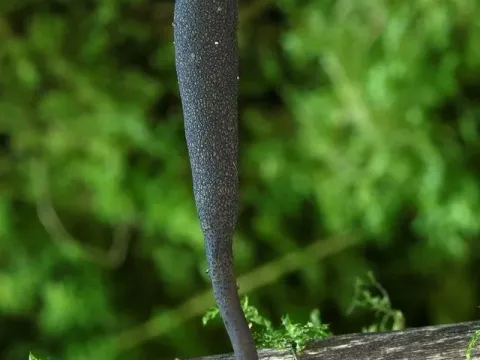
Xylaria longipes
Xylaria longipes
Xylaria longipes is a species of fungus in the family Xylariaceae, commonly known for its role as a wood-decay pathogen affecting broadleaf trees.
What the section contains
Xylaria longipes
As a xylotrophic organism, it secretes enzymes that break down the complex polymers of wood, primarily attacking lignin and cellulose within the host plant.
The fungus propagates through the production of ascospores released from distinct, club-shaped fruit bodies that emerge from the host's bark or dead wood.
It occupies the niche of white rot fungi, effectively causing the wood to become bleached and structurally fragile over a period of colonization.
This pathogen often acts as a latent invader, persisting in the tree's vascular system before conditions trigger the aggressive growth phase of the mycelium.
The primary diagnostic sign is the presence of hard, black, club-like or cylindrical stromata, typically growing in clusters on dead or weakened branches and trunks.
Internally, the infected wood exhibits signs of decay, appearing lighter in color, soft, and fibrous when compared to healthy, sound timber.
Visual symptoms on the tree canopy include dieback of individual branches, sparse leaf production, and chlorosis resulting from a disrupted transport system.
Bark in the infected areas often shows signs of longitudinal cracking or lesions where the fungus has emerged to complete its reproductive cycle.
The loss of structural integrity is a late-stage sign, where the trunk becomes brittle, posing a significant risk of sudden breakage during high winds.
Xylaria longipes thrives in environments characterized by high humidity and poor air circulation, such as dense forest understories or neglected gardens.
The fungus colonizes trees through open wounds, including pruning cuts, storm-damaged branches, or areas where the bark has been mechanically abraded.
A mild temperature range is highly conducive to its metabolic activity, facilitating the rapid expansion of the fungal colony throughout the heartwood.
Trees that are already under physiological stress from drought, poor nutrition, or soil compaction show a lower resistance to the infection.
The proximity of infected dead wood or fallen logs acts as a source of inoculum, significantly increasing the risk of transmission to nearby healthy trees.
The major impact of this fungus is the irreversible structural damage it causes to the host tree, eventually leading to its decline and death.
It poses a substantial safety concern in managed landscapes, as affected trees may become unpredictable hazards that can fall or shed limbs without warning.
The infection reduces the overall aesthetic and economic value of the trees, necessitating the removal of potentially valuable specimens.
Furthermore, it disrupts the ecological balance by creating persistent infection sites that continue to release spores into the surrounding environment.
Mitigating the presence of this fungus requires significant labor and management efforts, often involving the total removal of the infected plant material.
Preventative measures center on good arboricultural practices, such as ensuring proper tree spacing and avoiding damage to the trunk or roots during landscaping.
Immediate sealing of all pruning cuts and accidental wounds with wound paint or fungicidal pastes is essential to prevent entry of fungal spores.
Sanitation is key: all identified fruiting bodies and decayed wood should be pruned out or removed and destroyed by burning to minimize inoculum levels.
Maintaining tree vigor through appropriate fertilization and regular watering helps the plant develop natural defenses against pathogens.
Tools used on infected trees must be sterilized using appropriate disinfectants, such as alcohol or bleach solutions, to stop the spread between trees.