
Xylaria mali
Xylaria mali
Description
Symptoms
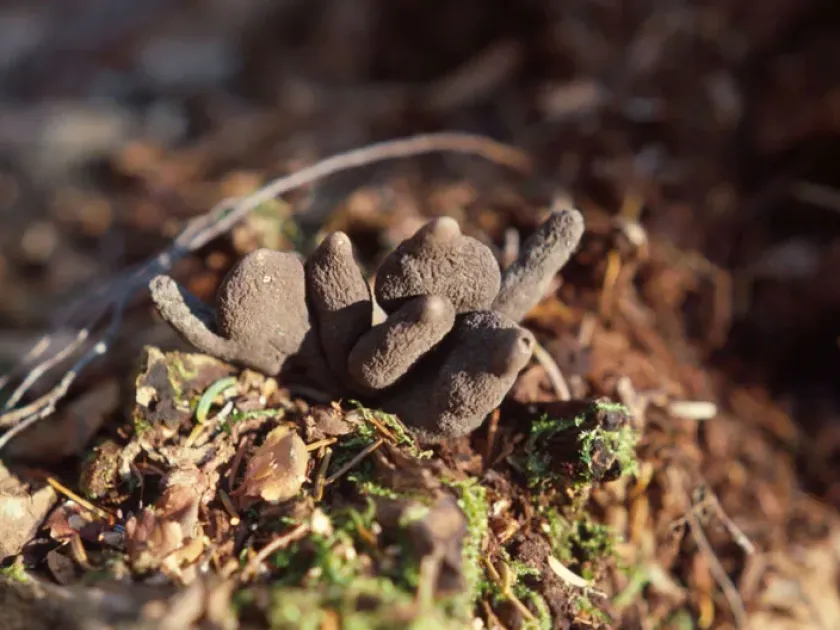
The primary visual sign of Xylaria mali is the appearance of distinct finger-like or club-shaped fruiting bodies protruding from cracks in the bark or from dead wood areas.
In the early stages of development, these structures are often covered in a whitish or greyish conidial layer, which gradually disappears as the fungus matures.
As the fruiting bodies age, they turn charcoal-black and develop a rough, hardened texture, often appearing very similar to burnt wood or carbon deposits on the tree surface.
Internally, the infected wood undergoes significant degradation, manifesting as a white rot. The structural integrity of the wood fibers is compromised, becoming soft and friable.
Infections are most frequently observed on older, weakened trees or in areas where the bark has been damaged by mechanical stress, pruning, or environmental factors.
Pathogen
The disease is caused by the fungus Xylaria mali, an ascomycete species that acts as a wood-decay pathogen, specifically targeting lignin and cellulose components of tree tissues.
While the fungus functions primarily as a saprophyte, it can behave as a facultative parasite, aggressively colonizing weakened parts of living apple trees when conditions are favorable.
The life cycle involves the production of ascospores, which are dispersed by wind and splashing rain, allowing the fungus to colonize new entry points such as pruning wounds.
Once established, the fungal mycelium penetrates deep into the vascular system of the wood, disrupting the transport of nutrients and water and causing systemic decline in the host tree.
The persistence of the pathogen in the orchard is largely dependent on the availability of dead wood, old stumps, and neglected debris which serve as primary reservoirs for spores.
Conditions for development
High humidity and poor air circulation within the tree canopy are the primary environmental factors that promote the growth and establishment of Xylaria mali spores on the bark.
Mechanical damage resulting from improper pruning techniques, hail damage, or frost cracks creates ideal entry sites for the fungus to bypass the tree's natural protective barriers.
Trees that are already under stress due to poor soil conditions, nutrient deficiencies, or pest pressure are significantly more susceptible to successful colonization by the fungus.
Moderate temperatures during the active growing season facilitate rapid mycelial growth and the subsequent development of reproductive structures on the wood surface.
Neglecting orchard hygiene, specifically leaving fallen branches or diseased wood in the vicinity, creates a continuous cycle of spore production that heightens the infection risk.
Why it matters
Xylaria mali poses a severe long-term threat to orchard productivity by inducing deep-seated wood rot that cannot be remedied once it has penetrated the core of the tree.
The damage leads to the gradual decline of the tree, characterized by chlorosis, reduced foliage density, stunted growth, and a significant decrease in fruit yield and quality.
As the internal structure of the wood is destroyed, the affected branches lose mechanical strength, increasing the risk of structural failure and branch breakage during high winds.
If left unmanaged, the infection will eventually spread throughout the trunk, leading to the total death of the apple tree and representing a significant economic loss to the grower.
Furthermore, an infected tree serves as a focal point for spreading the pathogen to healthy trees in the orchard, necessitating strict containment and disposal measures.
Protection
The most effective management strategy involves rigorous sanitation: all dead branches, stumps, and limbs showing signs of fungal fruiting bodies must be removed and burned.
- Prune out infected wood down to healthy, non-discolored tissue.
- Sanitize all pruning tools thoroughly between cuts to prevent cross-contamination.
- Apply protective wound sealants or copper-based pastes to large pruning cuts.
- Maintain tree vigor through proper fertilization and irrigation practices.
- Remove and destroy any dead wood or debris from the orchard floor regularly.
While chemical fungicides may offer some protection for open wounds, they are generally ineffective at treating existing deep-seated decay caused by Xylaria.
Early identification and removal of trees that have become unproductive or highly susceptible are essential to preventing the build-up of inoculum within the orchard environment.
Promoting good orchard management, including thinning the canopy for better light penetration and airflow, significantly reduces the environmental suitability for fungal establishment.
Discussion
No discussions yet — be the first.