
Xylaria polymorpha
Xylaria polymorpha
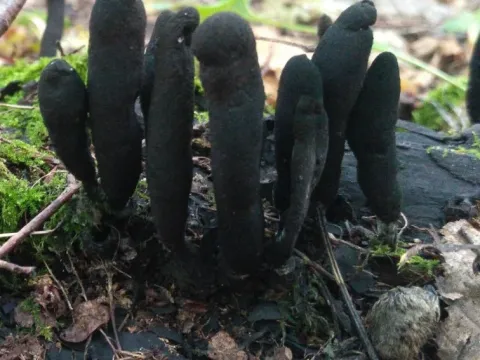
The disease is most easily identified by its unique fruiting bodies, which resemble human fingers protruding from the ground or bark. These are known as Dead Man's Fingers.
What the section contains
Xylaria polymorpha
The fruiting bodies are club-shaped or cylindrical, often curved and wrinkled. When young, they are covered in a white conidial dust, making them stand out against dark bark.
As they mature, the spore sacs turn dark, eventually becoming coal-black. The surface becomes hard and leathery, a distinct characteristic that separates this fungus from softer species.
Infection is frequently found at the base of the trunk or on large, exposed roots. Affected areas show localized bark decay and structural changes to the wood beneath.
Internal wood tissue exhibits signs of white rot. The wood loses its density and structural integrity, becoming soft and friable as the fungus digests the lignin and cellulose.
The causative agent is the ascomycete fungus Xylaria polymorpha. It acts as both a saprophyte and a facultative parasite, specializing in the decomposition of hardwoods.
The fungus invades the tree through wounds in the bark, pruning cuts, or frost cracks. The mycelium slowly spreads internally, degrading the wood structure over several years.
Reproduction occurs via asexual conidia and sexual ascospores. These spores are dispersed by wind and splashing rain, allowing the fungus to colonize neighboring susceptible trees.
The pathogen’s biology allows it to persist on dead organic matter, such as old stumps or fallen logs, until it finds an opportunity to attack living, weakened tree tissues.
The life cycle of this fungus is highly dependent on environmental moisture and temperature, contributing to its resilience in forest and garden ecosystems.
The fungus thrives in high-humidity environments and moderate temperatures. Spring and autumn are the most active periods for the development of the characteristic fruiting bodies.
It prefers shaded, damp areas with poor air circulation. Moist bark provides an ideal pathway for the fungal hyphae to enter and establish colonization within the tree.
Stressed trees, particularly those suffering from drought, waterlogging, or insect infestation, are most vulnerable. A weakened tree's natural defenses are often insufficient to prevent the infection.
Improper pruning techniques, such as leaving large, untreated wounds, significantly increase the risk of colonization by fungal spores present in the area.
Root-to-root contact between infected stumps and healthy trees is another common method of transmission, allowing the fungus to spread underground.
Xylaria polymorpha causes a severe white rot in the sapwood and heartwood. This degradation destroys the tree’s structural stability, posing a significant risk of collapse.
The disease interferes with the tree’s vascular system, blocking the transport of water and nutrients, which leads to canopy thinning, branch dieback, and eventual tree death.
Economic damage is substantial in forestry and horticulture, as the infected wood loses all structural value and cannot be utilized for timber or construction purposes.
In ornamental gardens and orchards, the presence of the fungus usually necessitates the complete removal of the tree to prevent the infection of surrounding specimens.
The remediation of affected sites is complex and costly, as it involves the total removal of all infected woody debris to eliminate the fungal spore bank.
The primary control measure is the immediate removal of infected trees, including the stump and major root systems. Leaving organic debris on-site is highly discouraged.
All bark damage or necessary pruning cuts must be treated with disinfectant and sealed with appropriate wound dressings to prevent spore entry.
Maintaining tree vigor through proper fertilization and irrigation is essential. A healthy tree can often compartmentalize minor wounds and prevent fungal spread.
Preventative measures include protecting the trunk from mechanical damage caused by lawnmowers or equipment, which are common entry points for the fungus.
- Monitor tree bases regularly for signs of fruiting bodies.
- Burn or remove all infected woody material from the site.
- Improve site drainage and air circulation to reduce humidity.
- Consult an arborist if signs of advanced decay are detected.