
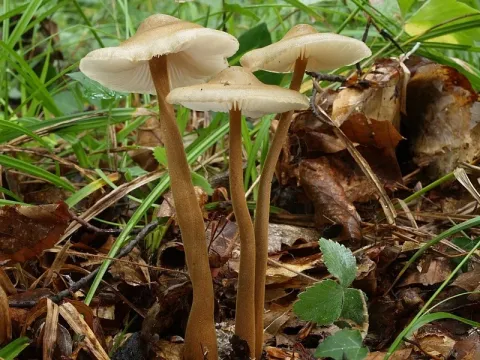
Xerula pudens
Xerula pudens
Xerula pudens (synonym Hymenopellis pudens) is a species of fungus in the Physalacriaceae family. In agronomic and forestry terms, it is categorized primarily as a xylotrophic saprotroph rather than a primary plant pathogen.
What the section contains
Xerula pudens
This fungus specializes in the decomposition of dead organic matter, specifically lignin and cellulose within decaying wood. It is an essential component of forest ecosystems, facilitating the nutrient cycle.
The organism propagates through spores that colonize weakened or dead wood substrates. Once established, its mycelium penetrates the wood tissue to extract energy through specialized enzymatic degradation.
Unlike obligate parasites, Xerula pudens does not possess the mechanisms required to infect healthy, vigorous plant tissues, limiting its threat to agricultural crops.
The fungus is structurally characterized by long, rooting stalks (pseudorhizae) that enable it to anchor deeply into soil or decaying root systems, allowing it to survive in various woodland environments.
The most common sign of its presence is the appearance of brownish, velvety-capped mushrooms emerging from the ground or near the base of decaying tree stumps.
Wood colonized by this fungus exhibits advanced decay, becoming soft, brittle, and fibrous. These changes are the result of the active breakdown of the wood's structural integrity.
Underneath the bark of infected woody material, one may observe white or pale mycelial mats. These mats indicate the active colonization of the wood tissue.
Symptoms are often internal and may remain unnoticed until the fruiting bodies (mushrooms) appear on the surface of the substrate.
Identification of the species is confirmed through microscopic analysis of its spores and the structure of its hymenium, distinguishing it from related wood-rotting species.
Xerula pudens thrives in environments with high moisture levels, typically found in shaded forest areas or locations with significant organic debris accumulation.
Optimal growth for the mycelium occurs within a moderate temperature range, generally between +15°C and +22°C. These conditions maximize the fungus's enzymatic activity.
The presence of woody debris, such as fallen branches or old stumps, provides the necessary substrate for the fungus to establish and persist over long periods.
Although it does not infect healthy trees, physical injury to roots or bark can provide easier access points for spores to germinate, especially in already stressed specimens.
Prolonged drought periods can significantly inhibit the development of fruiting bodies and slow the growth rate of the vegetative mycelium in the substrate.
The primary concern regarding Xerula pudens is its role in accelerating the decay of woody material, which can lead to reduced timber quality and weakened structural integrity in forest stands.
It can act as a secondary stressor, contributing to the decline of trees that are already suffering from other pathogens, pests, or unfavorable environmental factors.
In an agricultural context, its impact is usually negligible unless the crops are directly adjacent to poorly managed forest edges or areas with high woody decay residues.
Increased wood softness makes trees more susceptible to windthrow, which can result in significant economic losses in silviculture.
The decay process also creates entry points and favorable niches for secondary wood-boring insects, which may pose a more direct threat to the trees than the fungus itself.
The most effective management strategy is sound forest sanitation. This includes the timely removal of dead, rotting stumps, windfalls, and heavily decayed woody debris.
Maintaining the overall health and vigor of tree stands is the best preventative measure, as healthy trees have effective defense mechanisms against fungal colonization.
Monitoring forest margins near agricultural fields is recommended to identify potential hotspots of wood-rotting fungi and to take proactive measures to clear organic waste.
Fungicidal applications are generally not recommended for this saprotroph, as cultural practices like proper sanitation are both more effective and ecologically sustainable.
Ensuring that trees are not physically damaged during routine agricultural or silvicultural operations helps prevent the accidental introduction of fungal spores into sensitive tissues.