
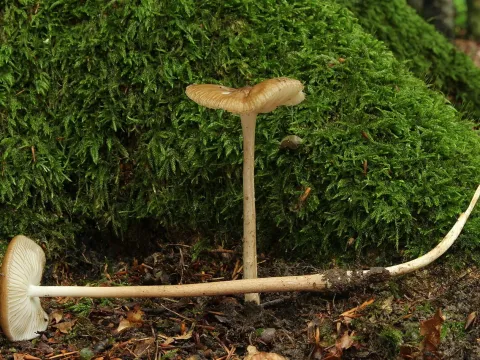
Xerula radicata
Xerula radicata
Xerula radicata, commonly known as the rooting shank, is a fungus species within the Physalacriaceae family that acts as a saprotroph on woody substrates.
What the section contains
Xerula radicata
The fungus is characterized by its long, taproot-like pseudorhiza that extends deep into the soil to attach firmly to tree roots.
While often found on decaying wood, it can colonize the roots of stressed or weakened trees, contributing to the decomposition of root tissues.
Its mycelium spreads throughout the soil and decaying wood, and the fungal cycle is completed when fruiting bodies appear on the surface.
It is primarily recognized as a decomposer, yet its presence often indicates that the host tree has suffered from previous environmental or biotic stress.
The most prominent sign is the appearance of brownish, mucilaginous fruiting bodies with long stems extending deep into the ground near the base of a tree.
The caps are typically slimy or sticky to the touch, with a pale to olive-brown color and widely spaced white gills.
Affected trees may exhibit signs of decline, such as premature leaf yellowing, thinning canopy, and stunted annual growth.
Inspection of the root zone often reveals softened or decaying tissues, which indicate that the fungal mycelium has infiltrated the structural roots.
Fruiting bodies are most visible during the summer and autumn months, particularly after periods of significant rainfall.
Xerula radicata thrives in environments characterized by high soil moisture and humid conditions, typical of shaded or poorly ventilated areas.
The fungus effectively colonizes wood that has been weakened by frost, mechanical damage, or previous exposure to other pathogens.
Overcrowded plantings that limit air circulation create a microclimate that favors the growth and spread of fungal spores.
Poor soil drainage and stagnant water at the base of the trunk significantly increase the risk of colonization by the mycelium.
Damage to the root system caused by soil cultivation provides entry points for the fungus, facilitating its spread into healthy tree tissues.
The primary damage caused by this fungus is the gradual decay of root structures, which impairs the tree's water and nutrient uptake.
As the root system decays, the tree loses structural integrity, becoming vulnerable to uprooting during storms and high wind events.
Chronic infestation leads to metabolic decline, reduced fruit production, and eventually the death of the host plant if left untreated.
Trees weakened by this fungus are frequently targeted by secondary wood-boring insects, which further accelerate the plant's demise.
Significant infestations can lead to long-term loss of landscape trees, making garden management more difficult and costly.
Effective prevention involves careful horticultural practices, such as avoiding physical damage to roots and trunks during maintenance.
Sanitation is key: regularly remove and destroy any dead wood or fallen logs, including infected roots, to limit the spore load.
Improve soil drainage to prevent moisture accumulation, as this is the primary environmental factor encouraging fungal growth.
Manual removal of fruiting bodies before they release spores can help reduce the local population of the fungus in the garden.
Strengthening tree health through proper fertilization and regular inspections is the most reliable way to prevent colonization.