
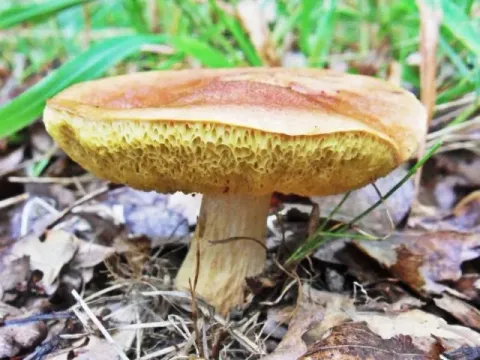
Moravian bolete
Xerocomus moravicus
The Moravian bolete (Xerocomus moravicus) is a wild mushroom characterized by a convex cap with a ochre-yellow to golden-brown color. Its surface may develop a network of fine cracks during dry weather.
What the section contains
Moravian bolete
The stipe is cylindrical and covered with a distinctive reticulate pattern, which is a key diagnostic feature distinguishing it from other closely related bolete species.
The pore surface underneath the cap is yellow, maturing into an olive-yellow shade. This tubular layer is a common feature among members of the genus Xerocomus.
Unlike many other boletus fungi, the flesh of the Moravian bolete typically shows little to no color change when exposed to air, making it unique in its response to physical trauma.
As a macrofungus, it does not show any symptoms typical of plant diseases like spots, necrosis, or wilting on host trees or nearby vegetation.
The Moravian bolete is strictly not a plant pathogen. It is a mycorrhizal fungus that thrives in a symbiotic relationship with the root systems of broad-leaved trees.
It assists trees in obtaining nutrients and water, which enhances the host plant's growth and overall vigor rather than causing any form of damage.
It lacks the enzymatic machinery required to break down living plant tissue, meaning it poses absolutely no risk to crops, ornamentals, or forest trees.
Classifying it as a plant disease is biologically incorrect; it is a vital part of the forest ecosystem that supports sustainable tree health.
Agronomically, its presence should be seen as an indicator of a rich and balanced soil environment, rather than a threat to be managed.
This species requires a stable forest habitat with established trees, as it depends on symbiotic associations with roots to survive and produce fruiting bodies.
The optimal development of the fungus occurs during the summer and autumn, provided there is adequate rainfall and humidity to support the underground mycelial network.
The soil should be rich in organic matter, such as leaf litter, which provides the necessary carbon and minerals for the fungal colonies to proliferate.
Moderately acidic to neutral soils are generally preferred, as the fungus is sensitive to extreme changes in soil pH levels caused by chemical treatments.
Minimal soil disturbance ensures the longevity of the mycorrhizal network, allowing the fungus to reappear in favorable locations year after year.
The Moravian bolete does not pose any danger to agricultural productivity, orchard health, or the structural integrity of trees.
It does not function as a parasite, nor does it host vectors for other diseases, making it completely harmless to human-cultivated plants.
The growth of these mushrooms does not lead to any economic loss; rather, it promotes soil biodiversity and ecological health in the surrounding landscape.
There are no recorded instances of this fungus damaging crops or causing any physiological distress to plants in either field or garden settings.
Therefore, it requires no intervention or mitigation strategies, as it is entirely beneficial to the ecosystem it inhabits.
Since the Moravian bolete is not a pathogen, there is no need for any chemical, biological, or physical control methods to eradicate it.
- Fungicides are ineffective and should not be used against beneficial fungi.
- There is no justification for removing the mushrooms to "protect" plants.
- No preventative agricultural practices are necessary to stop its spread.
Focusing on the control of genuine plant pathogens is recommended to maintain crop health, leaving beneficial macrofungi to play their role in the soil food web.
Preserving natural mycelial colonies is actually encouraged in modern agroforestry as it leads to more resilient and vigorous plant communities.