
Morenoina festucae
Morenoina festucae
The causal agent of this disease is the fungus Morenoina festucae, an ascomycete species. This pathogen is known for its ability to colonize various types of fescue grasses, primarily affecting the foliage and stems of the plants.
What the section contains
Morenoina festucae
Biologically, Morenoina festucae often functions as a weak parasite or saprotroph, finding its optimal environment on aging or stressed plant tissues. It can complete its life cycle by utilizing dead organic matter as a bridge to live plant hosts.
The fungus produces distinctive reproductive structures known as apothecia within the epidermis of the host leaf. These structures release spores that are easily disseminated by wind and rain, facilitating the spread of the disease within a field.
The pathogen is highly specialized in its host range, focusing on the Festuca genus. It thrives in ecosystems where fescue grasses are grown in high density, providing a continuous supply of potential host tissue.
Microscopically, the fungus shows complex development cycles that are synchronized with the seasonal growth phases of the grass host, allowing it to persist throughout the year if conditions permit.
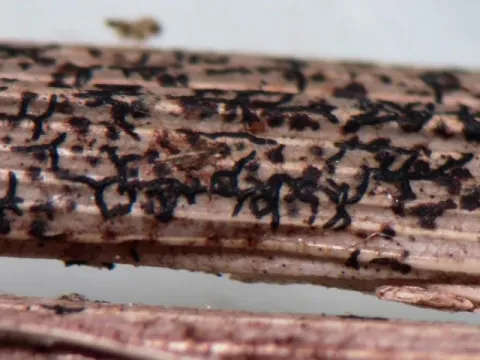
The primary clinical sign of Morenoina festucae infection is the presence of small, dark, and often elongated spots on the leaf blades of the fescue. These spots are the result of fungal colonization and tissue necrosis.
A diagnostic feature of the disease is the emergence of black, crust-like or dot-like apothecia that align with the veins of the leaves. This linear arrangement makes identification easier during field inspections.
Initially, symptoms might be subtle, occurring on the lower, older leaves that are naturally prone to senescence. However, as the infection progresses, these lesions can merge, leading to a significant yellowing or browning of the leaves.
The affected leaf tissue eventually loses its integrity and dries out, causing the plant to lose photosynthetic capacity. In advanced stages, the foliage may appear withered and brittle, significantly altering the visual and physical quality of the grass.
Observations under moist conditions often reveal a sparse fungal coating or specialized fruiting bodies that indicate the active growth stage of the pathogen across the plant's surface.
The development of Morenoina festucae is heavily dependent on moisture. High relative humidity, frequent rain, and lingering morning dew provide the necessary surface moisture for spore germination and infection.
Poor airflow, often caused by overly dense planting or high stand thickness, is a primary factor in disease outbreaks. Stagnant air allows for moisture to remain on the foliage for extended periods, creating an ideal environment for the fungus.
Temperature plays a crucial role in the disease cycle, with moderate conditions in the spring and autumn months being most favorable. These seasonal transitions often provide the perfect balance of moisture and warmth for pathogen spread.
Crop debris from previous seasons serves as a primary inoculum source. If the field is not cleaned or if debris is left to accumulate, the fungus can survive and re-infect the new growth when conditions become favorable.
Plants under nutrient stress or physical damage are significantly more susceptible to infection. A weakened root system or improper soil fertilization makes the grass less capable of mounting an effective defense against the fungus.
The disease causes a reduction in the quality of the fescue biomass, making it less suitable for grazing or hay production. The loss of nutritional value in the leaves directly impacts the efficiency of the field for livestock.
A decline in overall yield is common in fields severely infected with Morenoina festucae. The reduction in healthy green leaf area limits the plant's ability to produce energy, thereby stunting its growth and general biomass accumulation.
Chronic infections can lead to the thinning of the grass stand, which allows invasive weeds to colonize the area. This shifts the ecological balance of the pasture and reduces the longevity of the grass stand.
Economic damage occurs not only through lower yields but also through the potential need for expensive remedial actions. Additionally, the decrease in hay quality can lower market value for forage production.
In cases of seed production, the infection can interfere with the development of the reproductive parts of the grass, potentially reducing both the quantity and the viability of the harvested seeds.
Effective management begins with proper agronomic practices. Ensuring optimal seeding density is critical, as it promotes better airflow through the canopy and reduces the duration of leaf wetness.
Regular mowing is an essential strategy. It helps remove senescing leaves, which are the primary habitat for the fungus, and prevents the accumulation of debris that carries the infection into the next season.
Balanced fertilization, especially with sufficient potassium and phosphorus, helps strengthen the plant's natural resistance. Healthy, robust plants are far better at resisting infections compared to malnourished ones.
While often a last resort, fungicide applications can be used during critical growth periods if the disease pressure is high. It is important to follow local regulations and usage guidelines for forage grass protection.
Selecting resistant fescue varieties is the most sustainable approach to control. Breeding programs focusing on disease resistance can significantly minimize the risk of infection and reduce reliance on chemical inputs.