
Morenoina
Morenoina
The disease is caused by fungi of the genus Morenoina, belonging to the order Capnodiales. These microscopic organisms lead a parasitic life, specializing in infecting the aerial parts of various plant species.
What the section contains
Morenoina
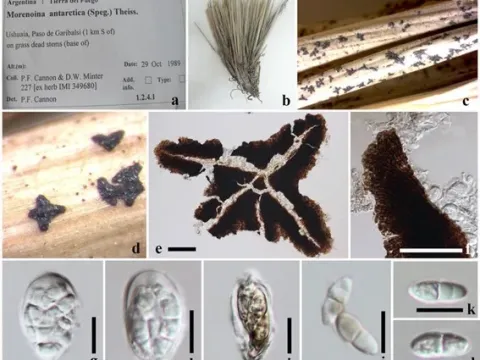
The fungus forms a superficial mycelium that penetrates the epidermal tissues of the host plant to extract nutrients. During its development, the pathogen forms fruiting bodies (apothecia), which are often round or elongated and dark, almost black in color.
Taxonomically, these fungi are closely related to a group of saprotrophic and pathogenic micromycetes capable of adapting to specific microclimate conditions on the surface of leaves and stems.
The fungus's development cycle includes both sexual and asexual sporulation, allowing it to spread effectively in crops when environmental conditions are favorable.
The biology of Morenoina has been studied primarily within mycological research, as this pathogen is more commonly found in natural ecosystems but can pose a threat to specific cultivated species.
The main sign of infection is characteristic dark spots or coatings on the leaf surface, which correspond to the locations of the fungus's fruiting bodies.
When examining infected areas, one can notice small dot-like structures that are tightly attached to the leaf cuticle and cannot be removed by mechanical means.
In areas where the mycelium accumulates, a change in the color of the plant tissue is observed, often accompanied by premature yellowing or chlorosis of the adjacent leaf areas.
Unlike many other leaf spot diseases, Morenoina infections often appear as scab-like formations that can merge into large infected areas under high infection density.
In later stages of the disease, infected leaves may fall off prematurely, negatively affecting the plant's photosynthetic capacity.
The development of the fungus is closely linked to high humidity levels, making periods of prolonged rain or heavy dew critical for the onset of an epiphytotic.
Optimal temperatures for mycelium growth and spore germination fall within the moderate range, typical of spring and autumn, when moisture remains on the leaf surface for longer periods.
Dense plantings and a lack of proper aeration of the plant canopy or tiers create a microclimate that facilitates the accumulation of infectious agents.
The presence of debris from infected plants in the soil or on the ground surface is the primary source of initial infection in the new growing season.
Damage to the epidermis by insects or mechanical trauma can facilitate the entry and colonization of host plant tissues by the fungus.
The harmfulness of the disease manifests in a decrease in overall plant productivity due to a reduction in the active leaf surface area involved in photosynthesis.
Under severe disease development, a weakening of metabolic processes in the plant is observed, leading to stunted stem growth and the development of underdeveloped generative organs.
Damaged tissues become vulnerable to secondary pathogens, which can accelerate the process of leaf death and cause general degradation of the crop's health.
For ornamental and fruit plants, Morenoina infection reduces the aesthetic and commercial value of the produce, leading to direct economic losses.
Chronic infection leads to the depletion of nutrient reserves in perennial crops, reducing their winter hardiness and ability to develop fully in the following year.
The main prevention method is adherence to agronomic rules, including proper spatial arrangement of crops and the prevention of high-density planting.
An important step is the timely collection and destruction of plant debris, as it serves as the primary reservoir for the survival of the pathogen's spores.
The use of preventive fungicides can significantly limit the spread of primary infection if the treatment is carried out before mass symptoms appear.
The use of resistant cultivars and hybrids is the most economically justified and environmentally safe way to contain the disease.
- Ensuring optimal mineral nutrition to boost the plant's natural immunity.
- Conducting regular phytopathological monitoring of the crops.
- Organizing a crop rotation system that prevents the accumulation of specific pathogens.