
Morchellaceae
Morchellaceae
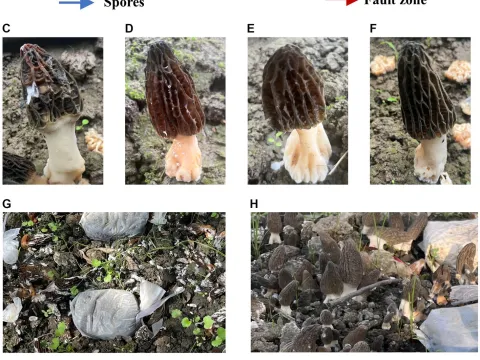
The Morchellaceae family comprises a group of ascomycetous fungi recognized by their distinctive, honeycomb-like caps. These caps are characterized by a network of ridges and pits that provide a unique, structured appearance.
What the section contains
Morchellaceae
The coloration of the fruiting bodies ranges from light cream to deep chocolate brown, depending on the species and the substrate upon which they grow. The stems are typically hollow and lighter in color than the caps.
Size varies considerably between species, with some individuals growing up to 20 centimeters in height. The texture of the cap is often firm in young specimens and becomes more fragile as it reaches full maturity.
Spore production occurs within the ascos, which line the pits of the cap. When mature, the spores are typically pale yellow or white, and they are released into the environment to colonize new areas.
It is essential to distinguish true morels (Morchellaceae) from false morels (Gyromitraceae). True morels possess a cap that is fused to the stalk, creating a fully hollow interior space.
It is vital to clarify that Morchellaceae are not plant pathogens. They do not cause diseases in crops and have no negative impact on the health of agricultural plants or horticultural species.
These organisms are strictly saprotrophic or potentially mycorrhizal in nature. They play a beneficial role in the environment by breaking down organic matter and contributing to soil health.
As members of the Ascomycota division, they do not produce haustoria or other structures used by parasitic fungi to extract nutrients from living plant tissues.
In an agricultural context, they are not considered pests or diseases. Their presence in a field or orchard is generally an indicator of a rich, non-depleted soil environment.
Because they are not pathogens, there is no need for protective measures, fungicides, or any other control methods directed against them.
Morchellaceae thrive in well-drained soils rich in organic matter. They are often found in areas that have recently experienced soil disturbance, such as forest edges, orchards, or sites with decaying wood.
The development of the fruiting body is primarily dependent on spring moisture and moderate temperatures. They emerge during the period of snowmelt and early spring growth.
They are particularly sensitive to environmental changes and the overuse of synthetic fertilizers or pesticides, which can disrupt the delicate balance of the fungal mycelium in the soil.
Stable soil conditions with high moisture retention and the presence of organic debris are crucial for the long-term survival of the mycelium throughout the year.
The biological cycle of Morchellaceae is deeply linked to seasonal patterns, requiring precise conditions of temperature and humidity to initiate the production of reproductive structures.