
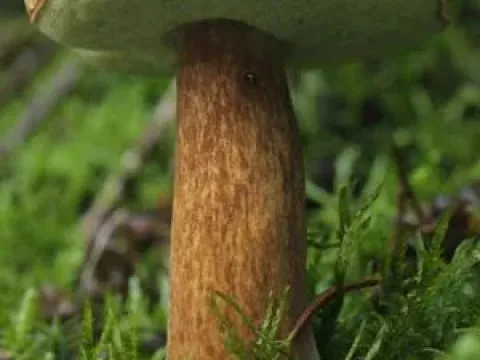
Bay bolete
Xerocomus badius
The Bay bolete (Xerocomus badius) is scientifically classified as a wild edible fungus and not a plant pathogen or disease.
What the section contains
Bay bolete
It exists in a mycorrhizal symbiosis with various tree species, forming a mutually beneficial relationship rather than a parasitic one.
The fungus provides the trees with essential minerals and water, while receiving carbohydrates in return, which is crucial for forest health.
There is no evidence suggesting that Xerocomus badius causes any structural damage or physiological stress to its host plants.
Therefore, it should not be categorized alongside pathogens that require plant protection products or control measures.
Xerocomus badius flourishes in acidic, coniferous, and deciduous forest soils with deep organic matter layers.
Environmental requirements include a cool, moist microclimate, typically found under a dense forest canopy with consistent rainfall.
The mycelium network requires stable soil conditions to thrive and continue its symbiotic cycle with tree roots.
Fluctuations in climate, such as severe droughts, directly inhibit the fruiting body production of this fungus.
No agricultural control measures are needed, as the presence of this fungus is an indicator of a healthy, stable forest soil environment.