
Bean phyllosticta leaf spot
Phyllosticta phaseolina
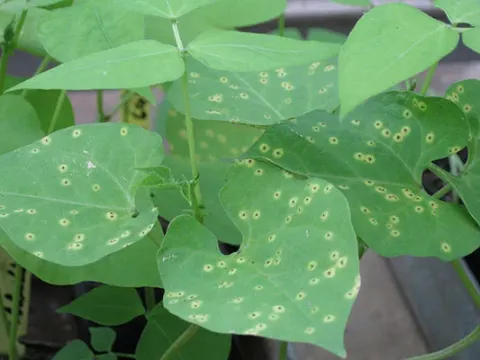
The primary symptom of bean phyllosticta is the appearance of distinct spots on the leaves. These lesions are usually round or irregular in shape, often featuring a light-colored center surrounded by a dark margin.
What the section contains
Bean phyllosticta leaf spot
As the disease progresses, small black fruiting bodies known as pycnidia develop within the necrotic centers of these spots. These are the reproductive structures of the fungus.
The infection can spread to leaf petioles, stems, and pods. In severe cases, the affected foliage turns yellow, withers, and falls off prematurely, affecting the plant's vigor.
Under humid conditions, the individual spots can coalesce, covering large areas of the leaf tissue and causing significant necrotic damage to the plant's surface.
Proper diagnosis is crucial, as the symptoms may resemble those caused by other leaf-spotting fungi, requiring careful inspection for the characteristic pycnidia.
The disease is caused by the fungus Phyllosticta phaseolina, which is classified within the order Sphaeropsidales. It is a specialized pathogen affecting various bean cultivars.
The pathogen survives the winter in infected plant debris left in the field or in the upper layers of the soil, remaining dormant until favorable conditions return.
Dissemination during the growing season occurs primarily through conidia (pycniospores), which are splashed by rain or dispersed by wind to healthy plant tissues.
The disease can also be seed-borne. Infected seeds serve as a primary source of inoculum, allowing the pathogen to move to new fields and begin early-season infection.
The life cycle of the fungus is strictly dependent on moisture availability, which is required for the spores to germinate and penetrate the host's tissue via stomata or wounds.
Phyllosticta leaf spot thrives in conditions characterized by high humidity and moderate temperatures, often coinciding with rainy periods during the growing season.
Temperatures ranging from +18°C to +25°C are optimal for the pathogen's growth and sporulation, significantly reducing the incubation period and facilitating rapid spread.
Poor crop management, including excessively dense planting, leads to reduced airflow and increased humidity within the crop canopy, favoring the development of the disease.
Morning dew and fog provide the necessary surface moisture for spores to colonize the leaves, acting as a major catalyst for disease outbreaks in the field.
Nutrient stress or other physiological weaknesses in the plants can lower their natural resistance, making them more susceptible to colonization by Phyllosticta phaseolina.
The economic impact of this disease is driven by the significant reduction in leaf surface area, which impairs photosynthesis and disrupts the plant's energy production.
Premature leaf drop weakens the bean plants, leading to reduced flowering and pod set, which results in lower overall yields at harvest time.
The quality of the harvested seeds is often compromised, as weakened plants struggle to allocate enough resources for proper seed filling and development.
In severe cases, yield losses can be substantial, making it necessary to implement integrated pest management strategies to protect the crop's profitability.
Additionally, seeds from highly infected fields may carry the pathogen, necessitating expensive seed treatment protocols or forcing farmers to find alternative clean seed sources.
The cornerstone of phyllosticta control is a sound crop rotation plan, ensuring that beans are not grown on the same plot for at least three to four years.
Implementing deep plowing after harvest to bury infected plant debris is an effective cultural practice that speeds up the decomposition of the inoculum source.
Using high-quality, certified, and disease-free seeds is essential. Seed treatment with appropriate fungicides before planting can provide protection against early infections.
During the growing season, if monitoring indicates the presence of the disease, fungicide applications can effectively mitigate the spread and protect the crop yield.
- Eliminating weeds that may act as alternative hosts for the fungus.
- Maintaining optimal planting densities to ensure adequate air circulation.
- Providing balanced fertilization to improve the plant's overall health and natural defenses.