
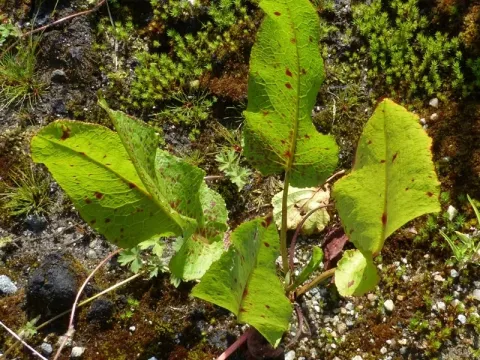
Sorrel leaf spot (Venturia rumicis)
Venturia rumicis
The causative agent of this disease is the ascomycete fungus Venturia rumicis, which acts as a specialized parasite on various species of the Rumex genus.
What the section contains
Sorrel leaf spot (Venturia rumicis)
The pathogen propagates primarily through conidia, which are produced in large numbers on the leaf surface during the warm and humid growing season.
The fungus overwinters in the form of mycelium and pseudothecia on crop debris and leaf litter remaining on the soil surface.
In the spring, as temperatures rise, the fungus releases ascospores which serve as the primary inoculum to infect the new, developing foliage.
Microscopic investigation reveals that the fungus penetrates the plant cuticle and colonizes the leaf tissue, causing localized cell death and disrupting the plant's metabolic functions.
The primary symptom of the disease is the appearance of distinct spots on the sorrel leaves, which can vary in size and shape depending on the infection severity.
These spots typically display a brownish or dark-brown color, often surrounded by a slightly darker border where the fungal mycelium is actively growing.
In high humidity, a characteristic olive-brown fungal growth (conidiophores and conidia) can be observed on the surface of the infected areas.
As the infection advances, the leaf tissue within the spots dies, often leading to the tissue becoming brittle and creating holes in the leaf blades.
Severe infestations cause extensive necrotic patches, leading to the yellowing and eventual wilting of the entire foliage, rendering the plant unsuitable for harvest.
The development of the disease is heavily favored by cool to moderate temperatures and high environmental moisture levels.
Frequent rainfall, persistent dew, and heavy fog are critical environmental factors that facilitate the germination of fungal spores on leaf surfaces.
Poor agricultural practices, such as excessive plant density, restrict air circulation and prevent leaves from drying quickly after rain, fostering fungal growth.
Insufficient light levels in shaded areas of the garden contribute to prolonged periods of high leaf surface moisture, exacerbating the spread of the pathogen.
Plants under nutrient stress or those growing in waterlogged soil are significantly more susceptible to infection by Venturia rumicis compared to vigorous plants.
Sorrel leaf spot causes significant economic impact by reducing the quality and volume of the harvestable yield.
The aesthetic damage makes the leafy greens unsellable, forcing growers to discard significant portions of their produce.
Repeated fungal attacks exhaust the plant's energy reserves, reducing the number of cuttings a grower can harvest during a single season.
If left unmanaged, the fungal population in the soil increases over time, making it increasingly difficult to cultivate sorrel on the same plot.
General plant health declines, leading to stunted growth and potentially poor overwintering performance for perennial sorrel crops.
Sanitation is the most effective management tool: all infected plant debris must be removed and destroyed immediately after the growing season.
Practicing strict crop rotation is essential, moving sorrel to a new location every three to four years to break the pathogen's life cycle.
Improving air drainage through proper spacing of plants helps to create a less hospitable environment for the development of fungal spores.
Maintaining optimal soil fertility and pH levels helps promote vigorous plant growth, which serves as a natural defense mechanism against the disease.
- Monitor crops regularly and remove any symptomatic leaves as soon as they appear.
- Ensure adequate drainage in the garden to prevent soil waterlogging.
- Avoid overhead irrigation during humid weather to keep the foliage as dry as possible.