
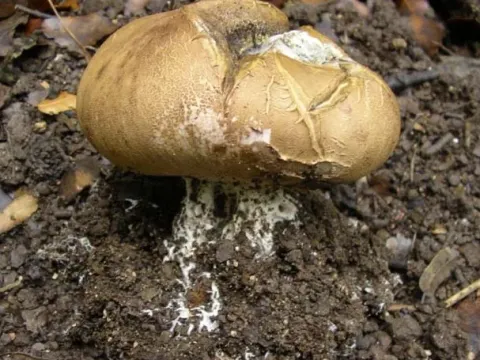
Southern false puffball
Scleroderma meridionale
The Southern false puffball, scientifically known as Scleroderma meridionale, is a basidiomycete fungus that typically colonizes soil enriched with organic matter.
What the section contains
Southern false puffball
Unlike edible puffballs, this fungus produces hard-skinned, yellowish-brown fruiting bodies that contain a dark, powdery spore mass upon maturity.
The mycelium of this fungus spreads extensively beneath the soil surface, forming a dense network that can outcompete beneficial microorganisms and plant root systems.
It acts primarily as a saprotroph, but in agricultural settings, its presence is often associated with the decline of soil quality and interference with plant health.
The organism is identified by its persistent, rough, and frequently cracked peridium which keeps the spores protected until they are fully developed for dispersal.
Scleroderma meridionale thrives in sandy, loose, and well-aerated soils where organic matter is readily available, particularly in warmer climatic regions.
It prefers habitats with slightly acidic soil conditions and often colonizes areas that are neglected or where mulch has been left undisturbed for long periods.
Increased humidity, combined with moderate to high temperatures, significantly promotes the development of the fungal reproductive organs above the soil surface.
The fungus is highly resilient and can persist in the soil for several seasons, especially if the environmental conditions remain favorable for mycelial expansion.
Human activities, such as transporting soil or garden tools, are the primary vectors for spreading its spores into new areas within a greenhouse or nursery.
The harm caused by this fungus is often indirect, stemming from its ability to disrupt the natural symbiotic relationships between plant roots and beneficial fungi.
The dense fungal mats can create a physical barrier around plant roots, restricting the uptake of vital nutrients and water, which stunts the growth of sensitive crops.
Furthermore, the presence of the fungus indicates an imbalance in soil microbiology, which can lead to increased vulnerability of plants to other opportunistic pathogens.
While the fruit bodies themselves are toxic if ingested, the primary agricultural concern remains the degradation of the root environment in young nursery plants.
Overall crop vigor and yield may be reduced as a result of the competition for resources between the fungus and the cultivated plant species in the same soil patch.
Manual removal of fruiting bodies before they release spores is a crucial first step in managing and preventing the spread of the fungus within the garden.
Improving soil structure through regular tilling and the introduction of well-composted organic matter helps reduce the suitability of the environment for this species.
The application of biological controls, specifically antagonistic fungi such as Trichoderma species, is highly recommended to suppress the growth of Scleroderma.
Liming the soil to adjust the pH toward neutral or slightly alkaline levels is a proven strategy to create a hostile environment for the development of this fungus.
- Maintain good hygiene by cleaning tools used in infected soil.
- Improve drainage to prevent waterlogging, which favors fungal growth.
- Practice crop rotation to minimize the build-up of specific soil pathogens.