
Sorrel rust
Uromyces rumicis
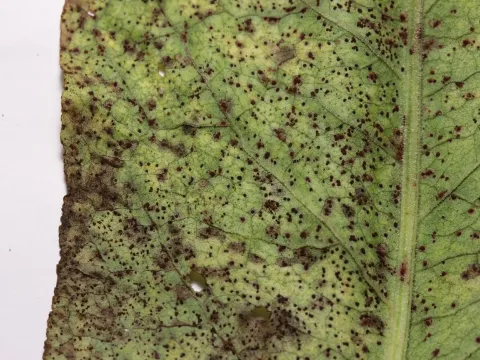
Sorrel rust is characterized by the appearance of small, yellow or light-brown spots primarily on the underside of the leaves in the early stages of infection.
What the section contains
Sorrel rust
As the disease progresses, these spots develop into raised pustules, which are the reproductive structures of the fungus releasing masses of rusty-brown spores.
The leaves of affected plants often show signs of chlorosis, curling, and eventually necrosis as the tissue dies due to the intense fungal growth.
In severe cases, the pustules can be found on stems and petioles, which severely hinders the transport of water and nutrients throughout the entire plant.
The presence of a dusty, rust-colored powder on the leaf surface is the most reliable visual indicator of an active Uromyces rumicis infection.
The causative agent is the fungus Uromyces rumicis, a specialized rust pathogen that exclusively targets species within the Rumex genus.
It is an obligate parasite, meaning it requires living host tissue to complete its life cycle and cannot survive on dead matter alone.
The life cycle involves the production of different spore types, which allows the fungus to survive winter and spread rapidly during the growing season.
Urediniospores are responsible for the secondary cycles of infection, facilitating the rapid spread of the disease between plants under favorable weather conditions.
Teliospores serve as the overwintering stage, residing on infected plant debris or perennial root systems to initiate new infections in the following spring.
The disease thrives in conditions of high humidity, frequent rainfall, and moderate temperatures ranging between 15°C and 22°C, which are optimal for spore germination.
Poor airflow, often caused by overcrowding or thick planting patterns, creates a stable microclimate that allows fungal spores to settle and penetrate host tissues easily.
Heavy morning dew or frequent fog provides the necessary surface moisture on the leaves, which is crucial for the pathogen to establish a successful infection.
Shaded areas or locations with inadequate drainage are particularly prone to rust outbreaks due to the prolonged wetness of the soil and foliage.
High nitrogen application can result in soft, tender foliage that is significantly more susceptible to penetration by the fungal hyphae.
The primary impact of sorrel rust is the total loss of marketability, as infected leaves are visually unappealing and generally unsafe for fresh consumption.
Photosynthetic efficiency is drastically reduced, leading to stunted growth, smaller leaf yields, and a overall decline in the health of the crop.
The disease weakens the root system of perennial sorrel, making it more vulnerable to winter frost and decreasing the longevity of the plantation.
Secondary pathogens, such as soft rot bacteria, often exploit the damaged leaf tissue, leading to rapid degradation of harvested greens during transport and storage.
Extensive infections can cause significant economic losses for commercial growers, requiring early harvesting or total destruction of the affected crop lots.
Effective management begins with rigorous field sanitation, including the thorough removal and destruction of all infected crop residues at the end of the season.
Proper plant spacing and weed control are essential to improve air circulation and reduce the humidity levels that the fungus requires to thrive.
Regular monitoring of the fields for early signs of infection allows for prompt removal of symptomatic leaves, preventing the widespread dispersal of spores.
Implementing a crop rotation system helps break the disease cycle, ensuring that host plants are not grown in the same soil for consecutive years.
- Balanced fertilization to promote strong plant immunity rather than excessive succulent growth.
- Utilizing disease-resistant cultivars when available in the local market.
- Improving soil drainage to prevent stagnant water and high humidity near the base of plants.