
Bean rust
Uromyces phaseolicola
The causal agent of bean rust is the fungus Uromyces appendiculatus (syn. Uromyces phaseolicola). It is an obligate parasite that specifically infects bean plants, showing high host specificity.
What the section contains
Bean rust
This fungus has a complex life cycle, producing multiple types of spores throughout the season, which allows it to thrive in diverse environmental conditions and persist in the field.
The disease cycle begins with primary infection by windborne spores (urediniospores). The fungus enters the host through stomata and develops mycelium within the leaf tissue.
Once established, the fungus extracts nutrients through specialized structures called haustoria, which penetrate the plant cell walls without killing the cell immediately.
The fungus produces masses of urediniospores that are released into the air, creating a repeating cycle of infection that can rapidly spread throughout the entire crop.
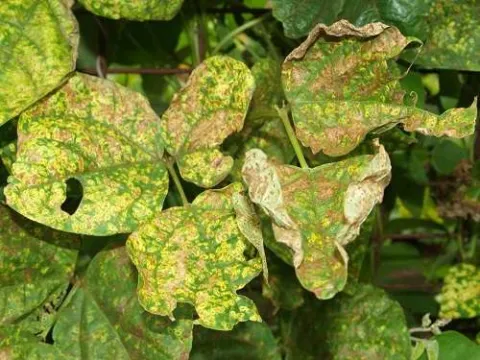
Initial symptoms appear as small, light-colored specks on the underside of the leaves. These quickly develop into raised pustules that rupture the epidermis.
The most distinctive sign is the presence of reddish-brown, powdery spore masses that give the disease its name. These pustules can eventually appear on petioles and stems as well.
As the infection progresses, the pustules turn dark brown or black, indicating the formation of teliospores, which represent the fungus's survival stage for the winter.
Heavy infection causes the leaves to yellow, curl, and wither. The plant's overall health declines rapidly as the leaf surface area for photosynthesis is severely reduced.
- Small chlorotic spots on leaves.
- Reddish-brown, powdery pustules.
- Premature leaf senescence and drop.
- Stunted plant development and reduced pod fill.
Bean rust thrives in high humidity and moderate temperatures. The fungus requires moisture on the leaf surface for several hours to initiate the germination of spores.
The ideal temperature range for disease development is between 18°C and 22°C. Periods of heavy dew, frequent rain, or cloudy weather accelerate the spread.
Dense crop canopies that limit airflow create a humid microclimate, significantly favoring the development of rust outbreaks within the field.
Imbalanced soil fertility, particularly excessive nitrogen fertilization, can make plants more susceptible to rust infection by promoting lush, tender tissue growth.
Since spores are dispersed by wind, the fungus can travel long distances, allowing it to colonize new fields effectively whenever environmental conditions align.
Bean rust can cause significant economic losses by reducing yields by up to 50%. The reduction in leaf area directly limits the plant's ability to produce healthy, filled pods.
Seeds from infected plants are often smaller, discolored, and shriveled, which reduces their quality for both human consumption and future sowing purposes.
Plants that are infected early in the growing season may fail to reach maturity or produce a commercially viable yield, leading to total crop failure in severe cases.
The necessity for fungicides to control the spread of rust adds to production costs, affecting the overall profitability of the legume enterprise.
Furthermore, the presence of rust spores on seeds or debris increases the risk of recurrence in the following years, complicating the management of the land.
Choosing resistant or tolerant cultivars is the most effective and sustainable strategy for managing bean rust in commercial agriculture.
Proper sanitation is essential; this involves removing or burying infected crop residues immediately after harvest to disrupt the fungus's survival cycle.
Maintaining proper plant spacing improves air circulation and reduces leaf moisture duration, which helps discourage the initial germination of fungal spores.
Fungicides containing active ingredients like sulfur, strobilurins, or triazoles can be applied at the first sign of infection to protect the developing foliage.
Implementing a crop rotation scheme where beans are not grown on the same site for at least three years helps lower the soil-borne inoculum levels significantly.