
Bearded milkcap
Lactarius trivialis
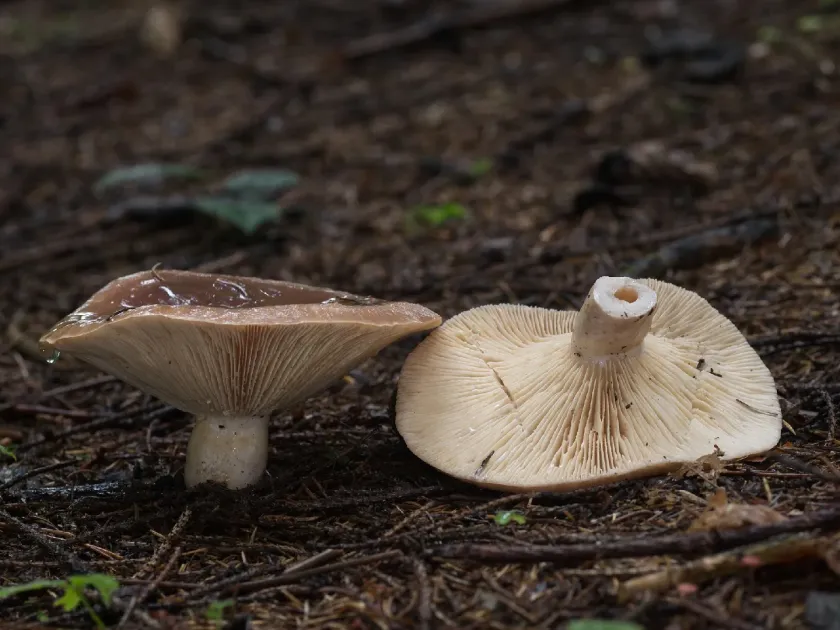
Description
Symptoms
The bearded milkcap features a cap that ranges from 5 to 15 centimeters in diameter, typically having a smooth, slimy surface.
Its coloration is distinctly grey-lilac or brownish-purple, which can appear quite variable depending on light and maturity.
The gills are crowded and decurrent, showing a whitish appearance that shifts towards an ochre or yellowish tone in older specimens.
When the flesh is damaged, it exudes a generous amount of white latex, which slowly transforms to a greyish-green color upon oxidation.
The stem is generally cylindrical, sometimes hollow in adulthood, with a surface that feels smooth and matches the paler tones of the cap.
Pathogen
Lactarius trivialis is not a plant pathogen; it is a symbiotic fungus that supports the health of forest ecosystems.
It forms ectomycorrhizal associations with coniferous trees, particularly spruce and pine, enhancing nutrient uptake for its hosts.
As a member of the Russulaceae family, its life cycle is deeply integrated with forest soil health and plant vitality.
The mycelium network functions by exchanging minerals and water for carbohydrates produced by the associated trees.
There is no agricultural hazard associated with this fungus, as it does not infect or cause diseases in cultivated crops.
Conditions for development
This fungus typically inhabits moist coniferous and mixed forests where the soil provides consistent humidity.
It thrives in temperate climates, with fruiting bodies appearing most abundantly during the wet months of summer and autumn.
Optimal development requires stable temperatures, generally between 15 and 20 degrees Celsius, and high atmospheric moisture.
Acidic to neutral soil profiles enriched with organic matter facilitate the robust expansion of the underground mycelium.
Shaded micro-habitats are preferred, as these areas maintain the necessary moisture levels for the continuous cycle of fruiting.
Discussion
No discussions yet — be the first.