
Description
Symptoms
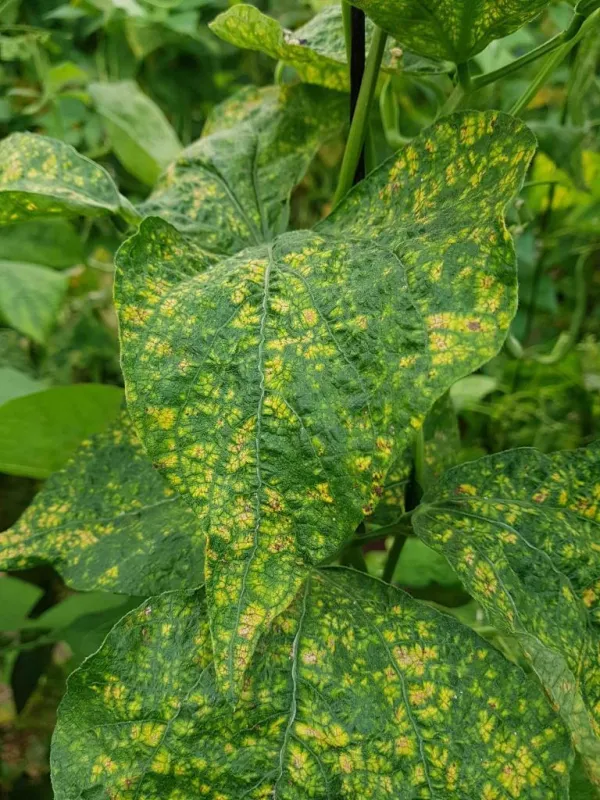
The most common symptoms include a distinct mosaic pattern on leaves, characterized by alternating patches of light yellow and dark green.
Leaves often become distorted, crinkled, or curled at the edges, which is a classic manifestation of this viral infection.
Stunting is a very prominent sign, as infected plants exhibit shortened internodes and a generally reduced overall size compared to healthy ones.
Some varieties may show necrotic streaks or spots on stems and petioles as the virus progresses through the vascular system.
In severe cases, flower development is stunted or entirely inhibited, leading to a significant reduction in the number of pods set.
Pathogen
The causative agent of this disease is the Bean yellow mosaic virus (BYMV), a globally distributed plant pathogen.
It belongs to the Potyvirus genus and is known for its wide host range, primarily affecting legumes and certain ornamental plants.
The virus particles are elongated and filamentous, containing a single-stranded RNA genome that facilitates rapid replication within plant cells.
BYMV is primarily transmitted by various species of aphids in a non-persistent, stylet-borne manner, making transmission extremely rapid.
Seed transmission is another significant pathway, which can lead to early-season outbreaks in newly planted bean fields.
Conditions for development
The virus thrives under warm and dry environmental conditions, which are also ideal for the proliferation of aphid populations.
Nearby perennial legume weeds serve as primary reservoirs for the virus, allowing it to survive during the off-season.
Dense planting patterns can facilitate the spread of the virus, as aphids move easily between closely spaced bean plants.
Mechanical transmission is possible if plant sap from an infected individual comes into contact with wounded healthy tissue during cultivation.
The prevalence of BYMV is significantly higher in regions where susceptible crops are grown in close proximity to each other year after year.
Why it matters
The primary economic impact is the severe reduction in total yield due to the plant's inability to support normal growth and pod maturation.
Viral infection disrupts photosynthesis, leading to physiological stress and premature senescence of the foliage.
Seeds harvested from infected plants are often small, shriveled, and have lower viability, which reduces their commercial value.
Infected bean plants become more susceptible to secondary stressors, including other pathogens and adverse weather conditions.
Economic losses in high-prevalence years can be catastrophic, often rendering fields non-productive and requiring costly remediation efforts.
Protection
The use of certified virus-free seed is the most effective primary measure for preventing the introduction of BYMV into a new field.
Implementing a rigorous weed control program around the field perimeter helps eliminate natural reservoirs for both the virus and its aphid vectors.
Applying systemic or contact insecticides targeting aphid populations can significantly slow the secondary spread of the virus within the crop.
Maintaining proper spatial separation between bean fields and other legume hosts helps to mitigate the risk of migratory aphid vectors.
Breeding and selecting resistant or tolerant bean cultivars remains the most sustainable and efficient strategy for long-term disease management.
Pathogens and affected parts
Affects crops · 1
Discussion
No discussions yet — be the first.