
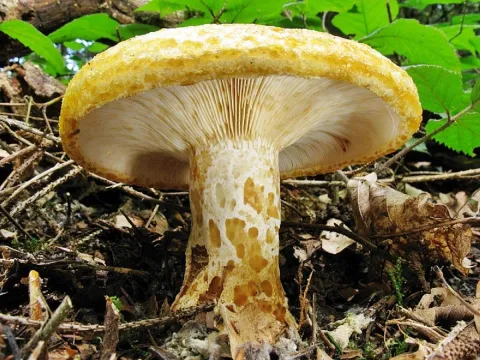
Bearded milkcap
Lactarius scrobiculatus
The bearded milkcap, scientifically known as Lactarius scrobiculatus, is not a plant pathogen or a disease. It is a basidiomycete fungus that exists in a mutualistic symbiosis with various forest tree species.
What the section contains
Bearded milkcap
In biological terms, this organism is a mycorrhiza-forming fungus. Its mycelium colonizes the roots of conifers, primarily spruce and fir, to facilitate the exchange of water and nutrients.
This symbiotic relationship is essential for forest ecosystem health and tree vitality. The fungus does not invade or destroy plant tissues, thus it cannot be classified as a disease.
The misconception of this fungus as a plant disease may arise from its presence in areas where diseased trees are also found, although their relationship is completely unrelated.
From an agronomical standpoint, this species is entirely harmless to agricultural crops, including cereals, fruits, and vegetables, as it lacks the mechanisms to act as a parasite.
The fruit body features a funnel-shaped, yellow to ochre cap that can measure between 6 and 20 centimeters across. The cap surface is typically moist or sticky.
A distinctive feature of the bearded milkcap is the heavily bearded or fringed margin of the cap, which gives it a ragged, hairy appearance.
The flesh is firm and exudes a thick, white milk-like juice when cut or damaged. Notably, this milk rapidly turns into a distinct sulphur-yellow color upon contact with air.
The gills are crowded and decurrent (running down the stalk). They are pale yellow and may occasionally display brownish spots or bruising when handled.
The stalk (stipe) is short, thick, and hollow. It is covered with characteristic small, elongated pits, which provide the key visual identifier for this specific Lactarius species.
The fruiting season of the bearded milkcap typically occurs from late summer through the autumn months. It thrives in high-humidity environments with mild temperatures.
The fungus is primarily associated with mature coniferous forests. It prefers soils with thick layers of organic debris and sufficient moisture content.
Mycelial activity is largely dependent on the presence of the root systems of spruce or fir trees, with which the fungus shares a symbiotic life cycle.
Drought periods or significant temperature fluctuations during the growing season can inhibit the emergence of the visible mushroom structures above ground.
Optimal development is usually observed following periods of sustained precipitation, which ensures the forest floor remains adequately damp for fungal growth.
The bearded milkcap causes no harm to crops, forests, or gardens. It has no negative impact on plant physiology, crop yield, or the vitality of agricultural vegetation.
As it does not act as a pathogen, it produces no enzymes that would degrade plant cellulose or lignin, thereby posing no threat to healthy garden or field crops.
Identifying this species as a disease agent is scientifically incorrect. It serves no role in the degradation of plants and does not contribute to crop loss in any capacity.
On the contrary, the mycorrhizal activities of this fungus help maintain soil health and support the growth of the forest trees it associates with.
There are no recorded instances of this fungus damaging or causing economic loss to any commercial agricultural enterprise.
No protection or control measures are necessary for the bearded milkcap, as it is a beneficial component of forest ecology rather than a nuisance or pest.
Applying fungicides to control this species is strongly discouraged, as it would cause unnecessary environmental damage and disrupt beneficial soil microorganisms.
In areas where its presence is deemed inconvenient, managing the moisture levels of the soil or the density of forest canopy is the only indirect management technique.
Prophylaxis for agricultural areas bordering forests focuses on maintaining proper crop health and soil quality, independent of the presence of symbiotic forest fungi.
No agricultural regulations or professional pest management standards involve active control measures against Lactarius scrobiculatus.