
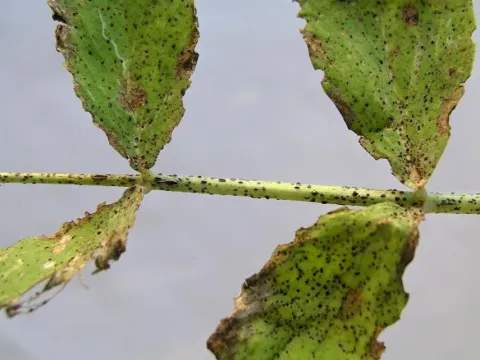
Uromyces rust (Uromyces)
Uromyces
The disease is caused by fungi of the Uromyces genus, which belong to the order Uredinales. These fungi are obligate parasites that require living plant tissue to complete their complex biological life cycle.
What the section contains
Uromyces rust (Uromyces)
The life cycle of Uromyces is highly sophisticated, often involving multiple spore stages, including urediniospores, which facilitate rapid secondary spread across fields during the growing season.
The fungus penetrates the plant through natural openings called stomata. Once inside, it establishes a network of hyphae that extend into the intercellular spaces, drawing nutrients through specialized structures known as haustoria.
Primary inoculum often survives as teliospores in soil or on crop residues. In some cases, the fungus persists as mycelium on perennial hosts during winter months, ensuring a source of infection for the next season.
There is a high level of host specificity among Uromyces species. Each species usually targets specific families or genera of plants, making it a persistent challenge in specialized agricultural production.
The most diagnostic feature of Uromyces rust is the formation of pustules, which appear as reddish-brown or dark-colored eruptive lesions on leaves and stems. These pustules contain thousands of spores ready for dispersal.
In early stages, infection manifests as chlorotic flecks. As the fungal development progresses, these spots erupt through the epidermis, creating the characteristic "rusty" appearance that gives the disease its common name.
Severe infections lead to widespread leaf chlorosis, curling, and eventual necrosis. As the plant loses functional photosynthetic tissue, it begins to decline in vigor and overall health.
Toward the end of the season, the pustules may darken, indicating the transition to teliospore production. This stage is designed to survive harsh conditions, allowing the fungus to persist until the next favorable period.
The impact extends to reproductive organs as well, often causing stunted fruit or shriveled seeds. This physiological stress disrupts the plant's ability to store energy effectively.
High humidity and moderate temperatures are the primary drivers of Uromyces outbreaks. The presence of free moisture, such as dew or rain, is essential for the germination of spores on the leaf surface.
Temperatures ranging from 15°C to 25°C are ideal for the rapid proliferation of the pathogen. Under these conditions, the fungal colony can produce new infectious cycles every week or so.
High plant density and poor field ventilation create a humid microclimate that favors infection. These conditions prevent leaves from drying out, providing the fungus with ample time to penetrate the host tissue.
Nutrient management plays a role, as excessive nitrogen application can lead to lush, susceptible tissue growth. Conversely, adequate potassium levels are known to enhance the plant's natural resistance.
Wind is the primary vector for long-distance dispersal of urediniospores. Once airborne, these spores can travel significant distances to infect neighboring fields, spreading the disease rapidly across regions.
The primary harm caused by Uromyces rust is the reduction of the photosynthetic surface area. This significantly decreases the plant's ability to produce assimilates, leading to lower yields.
Infected crops often produce smaller, shriveled seeds with reduced germination potential. This economic loss is compounded by the poor market quality and reduced value of the harvested product.
Systemic stress caused by the rust infection weakens the plant's immune system, making it more susceptible to opportunistic secondary pathogens and pest attacks.
In fodder or pulse crops, the nutritional value of the plant can be severely compromised. In cases of intense infection, the biomass may be rendered unsuitable for consumption due to fungal metabolites.
The financial impact of the disease includes both direct yield loss and the increased cost of fungicide applications required to manage the outbreaks in commercial farming settings.
Cultural management, particularly strict crop rotation, is essential for breaking the disease cycle. Avoiding the cultivation of susceptible hosts in the same field for multiple consecutive years is crucial.
Utilizing resistant or tolerant cultivars remains the most effective long-term strategy for managing rust diseases. Breeding programs continue to prioritize resistance to Uromyces species in major crops.
Sanitation practices, such as deep plowing to bury crop residues, help destroy the primary inoculum sources. Controlling weeds that serve as alternate hosts is also an important part of field management.
Chemical control via fungicides is recommended as soon as the first symptoms are detected. Systemic fungicides, particularly those containing triazoles or strobilurins, provide effective protection by inhibiting fungal growth.
- Use of certified, disease-free seed material.
- Balanced fertilization to ensure optimal plant health.
- Maintaining proper spacing to improve air circulation.
- Regular scouting for early disease detection.