
Urophlyctis
Urophlyctis
The causative agent of the disease is a chytrid fungus belonging to the Urophlyctis genus, which is known for its ability to parasitize plant tissues.
What the section contains
Urophlyctis
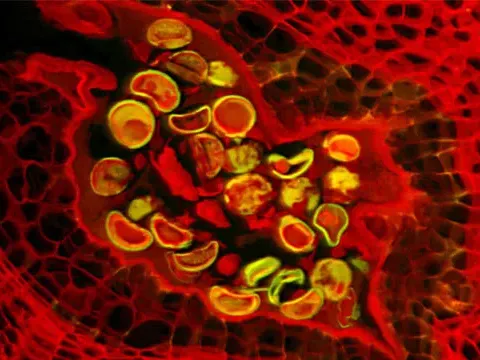
These fungi are obligate parasites that complete a significant part of their life cycle within the host plant, often inducing abnormal cellular growth.
The survival mechanism of the pathogen relies on the production of resting spores (oospores or zoosporangia) that can remain dormant in the soil for several years.
Infection primarily occurs via motile zoospores that swim through the soil water film to reach the healthy roots of susceptible plant hosts.
Once inside the plant tissue, the pathogen disrupts normal hormonal balance, leading to the development of characteristic pathological growths known as galls.
The most distinctive symptom of Urophlyctis infection is the formation of irregular, tumor-like galls on the crown and roots of the host plant.
Initially, these galls are soft and pale, but as the disease progresses, they become hard, dark brown, and warty in texture, severely compromising root function.
Above-ground, affected plants exhibit stunted growth, yellowing foliage (chlorosis), and symptoms of wilting during warm periods due to limited nutrient transport.
In the field, infected plants often appear in clusters, reflecting the localized nature of soil-borne spore contamination and the movement of zoospores in water.
Advanced stages of the disease result in root rot, causing the plant to break easily at the crown when pulled from the ground during diagnostic inspections.
The development of Urophlyctis is heavily dependent on high soil moisture, which is essential for the movement of zoospores from the soil to the host root.
Poorly drained soils or fields prone to seasonal waterlogging create a perfect environment for the pathogen to thrive and spread rapidly across the plantation.
The fungus generally favors moderate temperatures, typically between 15°C and 22°C, which often coincide with the active vegetative stage of many crops.
Soil texture plays a role in disease incidence, with heavier, clay-rich soils providing the moisture retention necessary for prolonged pathogen activity.
The accumulation of inoculum in the soil is exacerbated by continuous cropping practices that do not allow sufficient time for the pathogen population to decline.
The primary economic impact of Urophlyctis is the reduction in crop stand density, leading to lower forage yield and the necessity for early field rotation.
Infected plants suffer from compromised water and nutrient uptake, making them significantly more vulnerable to environmental stresses such as drought or frost.
The overall longevity of perennial crops is drastically reduced, requiring frequent and costly re-seeding of affected areas to maintain productivity.
Quality of the harvested crop can also be affected, as stunted growth and physiological stress alter the nutritional profile of the plant tissue.
The pathogen can be easily spread through farming machinery that carries infested soil from contaminated fields to previously clean production areas.
The most effective strategy for managing Urophlyctis is the implementation of a rigorous crop rotation program, avoiding susceptible species for several years.
Improving soil drainage through tile installation or land leveling is crucial to prevent the water accumulation required for spore dispersal and infection.
Sanitation practices, such as thoroughly cleaning farm equipment between fields, are essential to prevent the mechanical transfer of contaminated soil.
Ensuring the use of certified, disease-free seed and materials helps avoid the accidental introduction of the pathogen into new, healthy agricultural land.
Research into resistant cultivars remains the best long-term approach for minimizing losses, as chemical control for soil-borne chytrids is often inefficient.