
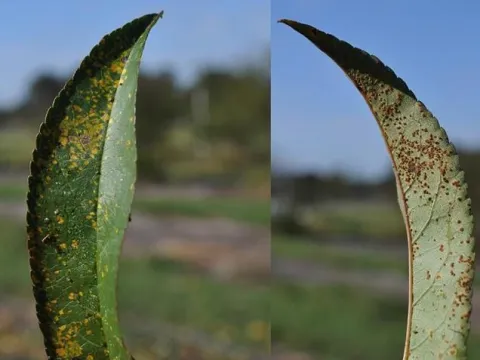
Uropyxidaceae rust fungi
Uropyxidaceae
The pathogens of this disease are basidiomycete fungi belonging to the Uropyxidaceae family (order Pucciniales). These are obligate parasites that depend entirely on the host plant for nutrition, completing complex life cycles often involving different stages.
What the section contains
Uropyxidaceae rust fungi
The fungus penetrates host tissues primarily through stomata, developing a mycelium within intercellular spaces. As the pathogen matures, it redirects the host's energy towards the production of massive quantities of spores, leading to structural damage.
A distinctive feature of the Uropyxidaceae family is the morphology of the teliospores, which are often multicellular and possess specific germination pores. These structures are highly adapted for survival and dissemination.
Spread is facilitated by urediniospores, which can be dispersed by wind over vast distances, enabling the pathogen to initiate new infections rapidly under favorable conditions throughout the growing season.
The lifecycle is tightly synchronized with the host plant's development, allowing the fungus to maximize its reproductive output. Survival strategies include the persistence of inoculum in crop debris or alternative host species during the dormant season.
The most visible symptom is the appearance of pustules (uredinia or telia) that erupt through the plant epidermis. These structures contain massed spores, appearing as dusty, raised patches on leaves and stems.
Pustule colors typically range from bright orange or yellow to deep brown or black, representing the different stages of the fungal life cycle and spore maturation. The discoloration is a direct result of spore accumulation.
Surrounding the infection sites, chlorotic spots often develop, eventually progressing to necrosis. As the disease advances, leaves may dry out prematurely, significantly reducing the photosynthetic capacity of the plant.
Severe infections can cause plant stunting, tissue deformation, and premature defoliation. In highly susceptible cultivars, the entire plant canopy may turn brown and wither, leading to a significant loss of vigor.
Microscopic examination reveals the unique shape and wall architecture of the spores. These morphological details are essential for accurate identification and distinguishing Uropyxidaceae from other rust-causing fungi.
High humidity and the presence of surface moisture, such as dew or rain, are essential for spore germination and successful infection. Sustained periods of wet weather provide the ideal environment for the fungus to thrive.
Temperatures ranging from +15°C to +25°C are typically optimal for the rapid colonization and reproduction of the pathogen. Fluctuations in temperature that promote dew formation facilitate the spread of the disease.
Dense planting configurations reduce airflow and increase humidity levels within the canopy, creating an environment highly conducive to disease outbreaks. Poor ventilation allows spores to accumulate and penetrate host tissues more effectively.
The presence of weeds or volunteer crops that serve as alternative hosts provides a bridge for the pathogen between growing seasons. This reservoir of inoculum makes it difficult to eliminate the disease from the field.
Imbalanced nutrient management, particularly excess nitrogen, promotes succulent growth that is more susceptible to fungal attack. Conversely, maintaining balanced fertility helps bolster the plant's natural defense mechanisms.
The primary economic harm caused by rust fungi is the reduction in yield due to the destruction of green leaf area. This limits the plant's ability to produce carbohydrates, leading to poor grain filling or fruit development.
Crop quality is severely compromised, characterized by lower test weights, reduced protein content, and overall poor uniformity. In addition to yield losses, plants become more vulnerable to environmental stresses like drought.
Financial losses occur due to both reduced productivity and the increased costs associated with repeated fungicide applications. In extreme cases, the total loss of harvestable yields can occur if the epidemic is left unmanaged.
Rust-infected plants often exhibit poor stress tolerance, making them prone to lodging or secondary infections by other pathogens. This cumulative effect significantly diminishes the overall sustainability of the agricultural operation.
Long-term consequences involve the buildup of spore loads in the soil or local environment, which can affect future planting seasons if resistant cultivars are not integrated into the management plan.
The most effective strategy for managing rust is the deployment of genetically resistant crop varieties. Breeding for immunity or tolerance is the cornerstone of sustainable disease control in commercial agriculture.
Implementing strict crop rotation disrupts the pathogen's life cycle, as many rust species are host-specific. Changing the crop species prevents the continuous accumulation of spores in a single field.
Cultural practices, including the thorough incorporation of crop residue into the soil, help accelerate decomposition and reduce the survival of fungal inoculum. This significantly lowers the primary infection pressure.
Chemical control using systemic fungicides is necessary when infection levels exceed the economic threshold. Timely scouting and application are critical to preventing the rapid spread of spores throughout the field.
Optimizing plant nutrition by ensuring adequate potassium and phosphorus levels strengthens cell walls and improves overall plant health, making the crop less hospitable to invading fungal hyphae.